
Disperse Blue 79: The Complete Guide to Polyester Navy Dyeing
Disperse Blue 79 is one of the most widely used high-energy disperse dyes in the global textile industry. Whether you are a dye-house technician, a textile mill owner, or an international buyer sourcing dyestuffs for polyester production, understanding what Disperse Blue 79 can and cannot do will save you money, time, and rejected batches. This guide covers its chemistry, dyeing performance, applications, compliance, and sourcing strategy — everything you need to make confident purchasing decisions.
1. What Is Disperse Blue 79? Chemistry and Key Properties
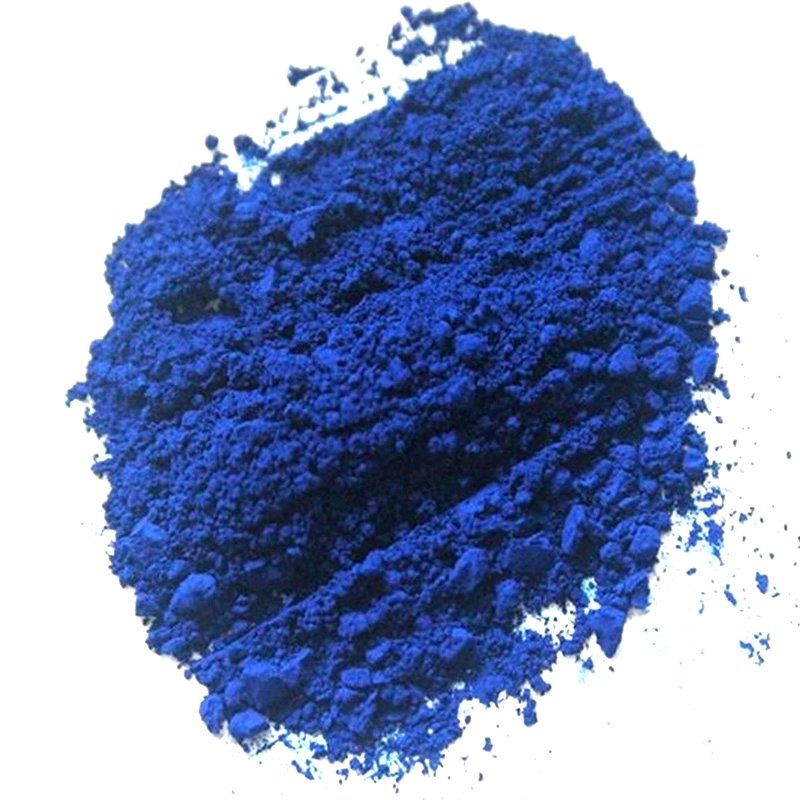
Disperse Blue 79 (CAS 12239-34-8, molecular formula C24H27BrN6O10) belongs to the azo disperse dye family and is classified as a high-energy disperse dye, designed for demanding polyester dyeing conditions. It is supplied as a black-grey powder or granules, soluble in acetone, with a maximum absorption wavelength around 590 nm, placing its shade firmly in the deep navy region. Its melting point is approximately 146 °C, with a density of roughly 1.54 g/cm³.
The "high-energy" label matters in practice. Compared with low- and medium-energy dyes, Disperse Blue 79 has a larger molecular structure, which gives it outstanding sublimation fastness but requires higher dyeing temperatures to diffuse into polyester fibers. It is also alkali-sensitive, works best at a dye bath pH of 5–6, is tolerant of iron ions, but significantly shade-sensitive to copper ions — worth checking your water and equipment before production.
 2. Dyeing Performance: Fastness ans Behaviord Proces
The reputation of Disperse Blue 79 rests on its performance. On polyester at conventional depths, it typically delivers light fastness of 5–6, wash fastness of 4–5, sublimation fastness of 4–5, and rubbing fastness of 4–5. Sublimation fastness is the genuine headline advantage: fabrics dyed with it can undergo heat setting, pleating, and resin finishing without significant shade migration, which is why it is regarded as one of the principal dyes for deep navy shades among high-temperature disperse dyes.
In terms of process flexibility, Disperse Blue 79 performs well in high-temperature, high-pressure (HT/HP) dyeing, typically 125–135 °C, and in hot-melt (thermosol) dyeing for continuous processing, as well as direct printing of polyester fabrics. It combines readily with disperse yellow brown and red components (such as H-2RL and H-2GFL types) for trichromatic navy and navy-black formulations, making it a staple of dye-house stock rooms.
Its boundaries are equally important. Because of its high-energy character, levelness can be slightly inferior when dyeing piece goods, so careful temperature ramping is required, and it is not recommended for certain acetate or triacetate fibers. These are not defects; they define the correct application window every professional buyer should understand.
3. Applications Across Textile Markets
Demand for Disperse Blue 79is driven by end-use segments that all share one requirement: deep, reliable navy shades that survive real-world use.
- Apparel and workwear. Navy dominates uniforms, workwear, suits, and casual fashion. Disperse Blue 79 delivers the rich navy-black depth brands specify, batch after batch.
- Home textiles. Curtains, drapes, and upholstery face prolonged light exposure; light fastness of 5–6 makes this dye a dependable choice where fading would trigger quality complaints.
- Automotive and technical textiles. Seat fabrics and headliners must resist both light and heat. High sublimation fastness is exactly what automotive specifiers look for.
- Blended fabrics. For polyester/cotton and polyester/wool blends, this dye integrates into one-bath or two-bath sequences, giving mills one trusted blue across a wide product mix.
For exporters and mills, one dye serving multiple product lines simplifies inventory and shade matching across collections.
4. Compliance, Quality Assurance, and Sourcing
For international buyers, performance is only half the story. Since Disperse Blue 79 is an azo disperse dye, buyers in regulated markets typically ask suppliers to confirm compliance with applicable aromatic amine restrictions under EU chemical regulations such as REACH, and many brands require OEKO-TEX® certification or equivalent. A professional supplier should provide, without hesitation: a Certificate of Analysis (COA) for each batch, an SDS/MSDS, a technical data sheet with fastness data, and a shade card.
Batch-to-batch consistency is the most common quality complaint in the dye trade, so serious buyers should request COAs from two consecutive batches and run a lab-scale dyeing trial before placing large orders. Strength variants are also worth understanding — Disperse Blue 79 is commonly traded at 100% and 200% strengths (for example, "HGL 200%"), and price per unit of actual color strength, not nominal grade, should drive comparisons.
When evaluating suppliers, check five things: documentation integrity, consistency track record, sample policy, supply reliability (lead time, MOQ — often 25 kg — packaging, and peak-season inventory), and technical support for troubleshooting pH control, water quality, and copper contamination. Red flags include pricing far below market range with no documentation, vague compliance answers, and no consistent shade references. In a commodity market, the difference between suppliers is rarely the dye itself; it is the reliability of what arrives and whether it matches what you tested.
Conclusion
Disperse Blue 79 remains a cornerstone of polyester navy dyeing because it combines deep shade build-up, excellent sublimation fastness, and broad application flexibility. Whether you run daily dye-house production or build an import portfolio, the winning move is the same: understand the chemistry, verify fastness data, demand solid documentation, and partner with a supplier who treats batch consistency as non-negotiable. Get those fundamentals right, and Disperse Blue 79 will keep your navy shades deep, durable, and dependable for years.
If you have any needs, please contact us via email to obtain a free quotation.