
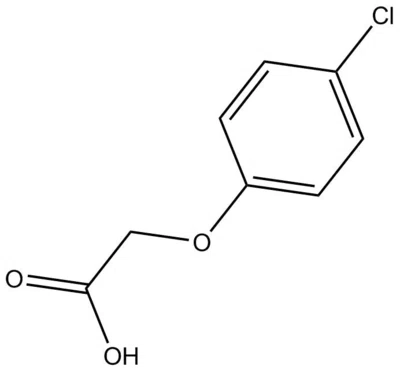
4-Chlorophenoxyacetic acid (4-CPA)—also known as *p*-chlorophenoxyacetic acid or by trade names such as Fangluosu, Fanqieling, Zuoguoling, and Cushengling—is a broad-spectrum plant growth regulator widely used in agriculture, horticulture, and medicine.
Its core functions and effects include:
1. Promoting fruit set and preventing fruit drop (primary application)
Preventing flower and fruit drop: Application during the flowering or young fruit stage significantly reduces the shedding of flowers and fruit.
Increasing fruit set rate: Promotes ovary development and increases the rate of fruit formation.
Inducing seedless fruit: Induces parthenocarpy, resulting in seedless fruits such as tomatoes and cucumbers.
Fruit retention and development: Prevents premature fruit drop and promotes fruit enlargement.
2. Flower and fruit thinning
Tomatoes: 4-CPA can thin flowers, control the number of fruits set, and improve fruit quality.
Peach trees: 4-CPA can thin fruit, preventing overcrowding and increasing individual fruit weight.
Other fruit trees: 4-CPA can regulate fruit load, improving fruit size and quality.
3. Plant growth regulation
Promoting cell elongation: Acts similarly to auxins, promoting the elongation growth of plant cells.
Inducing rooting: Promotes the formation of adventitious roots in certain plants.
Delaying senescence: Delays the aging of leaves and fruit, extending shelf life.
4. Herbicidal activity
Selective herbicidal action: Inhibits the growth of certain broad-leaved weeds.
Usage limitations: Rarely used as a herbicide; primarily utilized as a plant growth regulator.
5. Pharmaceutical intermediate
Drug synthesis: Serves as an intermediate in pharmaceutical chemistry for the synthesis of other drugs.
Research reagent: Used in plant physiology research.
If you have any needs, please contact us via email to obtain a free quotation.