
Product Details
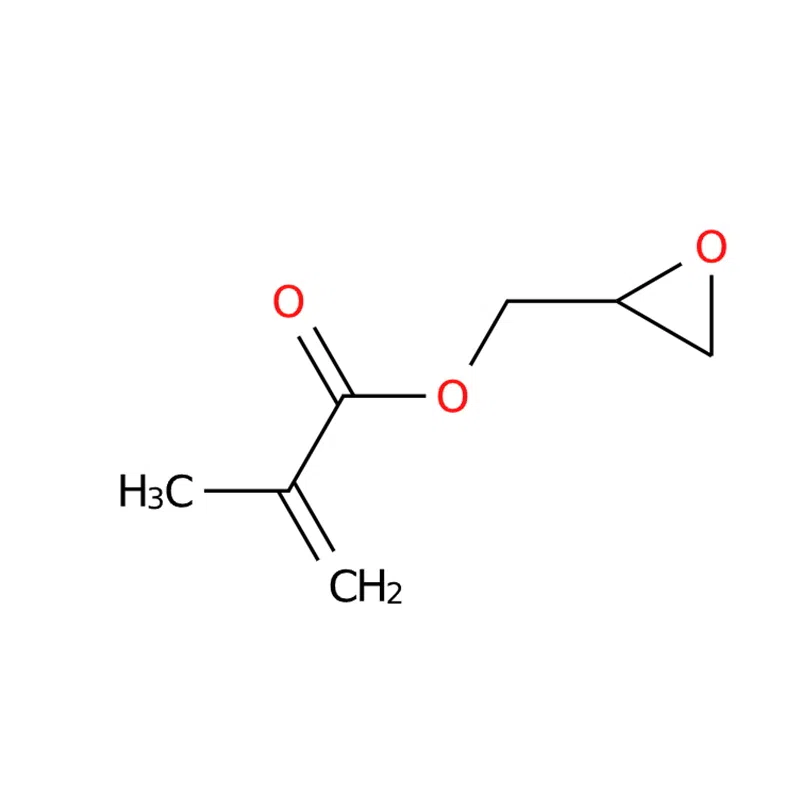
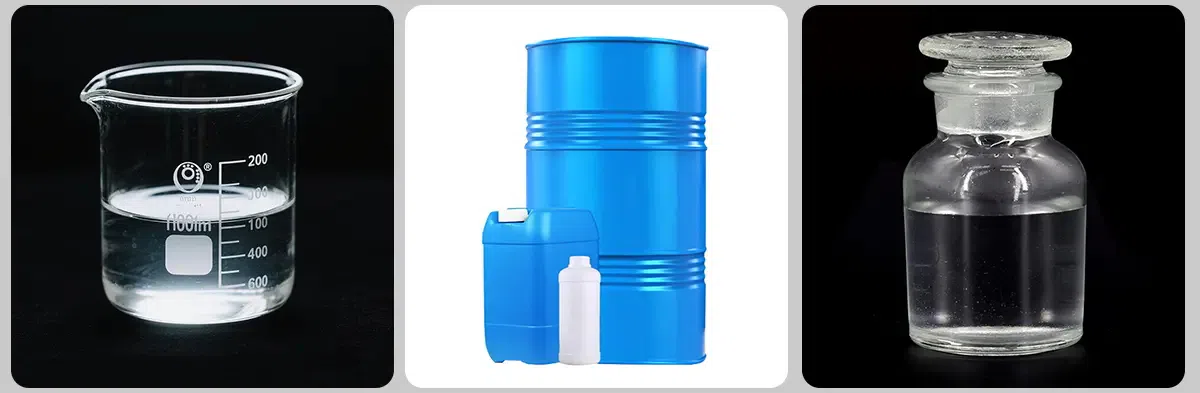
Glycidyl methacrylate (GMA) is a clear, colorless liquid with a pronounced ester-like and fruity odor. Its molecular structure consists of a polymerizable methacrylate group on one terminal and a reactive epoxy group on the other.
GMA is slightly soluble in water and miscible with most organic solvents, featuring relatively low volatility, and its vapor is heavier than air. It readily undergoes copolymerization with various functional compounds such as phenols, ketones, acids and amines. The epoxy functional group improves the durability, mechanical strength, optical transparency and adhesive performance of resultant materials.
Parameters
| Melting point | -52°C |
| Boiling point | 189 °C(lit.) |
| density | 1.075 g/mL at 20 °C |
| vapor pressure | 4.2hPa at 25℃ |
| refractive index | n20/D 1.449(lit.) |
| Fp | 169 °F |
| storage temp. | 2-8°C |
| solubility | Chloroform (Slightly), Methanol (Slightly) |
| form | Liquid |
| color | Clear |
| Water Solubility | 0.5-1.0 g/100 mL at 20 ºC |
| BRN | 2506 |
| Stability: | Unstable. Light sensitive. May be stabilized with around 100ppm MEHQ. Refrigerate. |
| InChIKey | VOZRXNHHFUQHIL-UHFFFAOYSA-N |
| LogP | 0.96 at 25℃ |
| CAS DataBase Reference | 106-91-2(CAS DataBase Reference) |
| IARC | 2A (Vol. 125) In prep. |
| NIST Chemistry Reference | 2-Propenoic acid, 2-methyl-, oxiranylmethyl ester(106-91-2) |
| EPA Substance Registry System | Glycidyl methacrylate (106-91-2) |
Safety Information
| Hazard Codes | Xn,T,T+ |
| Risk Statements | 20/21/22-36/38-43-60-45-68-39/26-34 |
| Safety Statements | 26-28-28A-45-36/37-53-36/37/39 |
| RIDADR | UN 2810 6.1/PG 3 |
| WGK Germany | 2 |
| RTECS | OZ4375000 |
| TSCA | Yes |
| HazardClass | 8 |
| PackingGroup | III |
| HS Code | 29161490 |
Hazardous Substances Data | 106-91-2(Hazardous Substances Data) |
| Toxicity | dog,LCLo,inhalation,1400mg/m3/6H (1400mg/m3),LUNGS, THORAX, OR RESPIRATION: OTHER CHANGES,National Technical Information Service. Vol. OTS0530684, |
Product Application
Glycidyl methacrylate (GMA) is a commonly utilized monomer for synthesizing epoxy resins, which introduces epoxy functionality into polyolefins and other acrylate-based resins. It is widely adopted in the manufacture of polymer coatings, surface finishes, adhesives, plastics and elastomers.
GMA-modified dextran has been investigated as a biocompatible hydrogel material. Furthermore, in-situ polymerization of GMA with trimethylolpropane trimethacrylate can produce macroporous adsorbents. GMA can also be grafted onto polypropylene substrates for functional modification.