
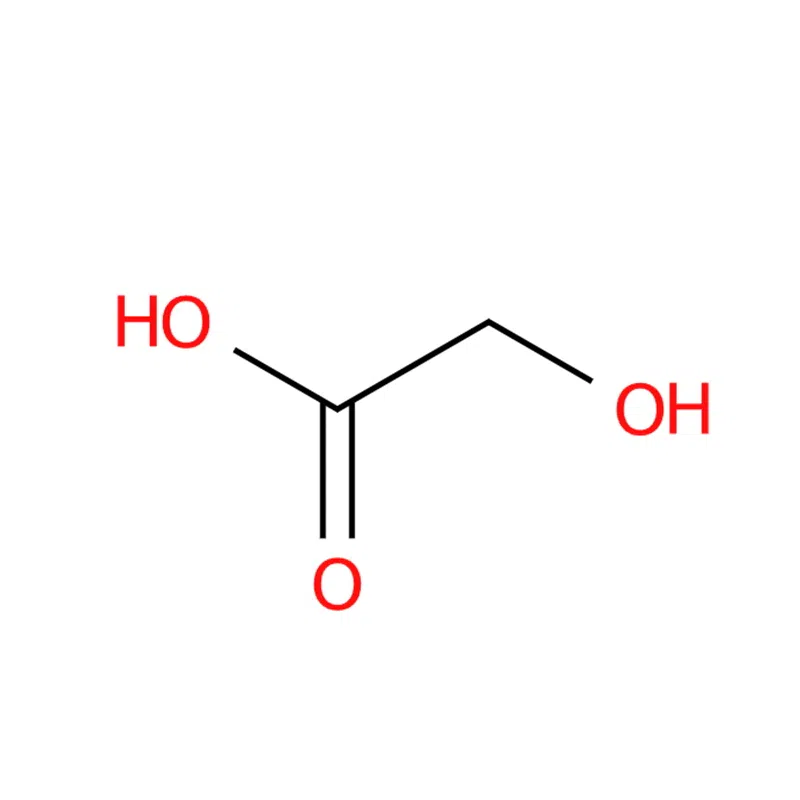
Products Description of Glycolic Acid CAS#79-14-1
Glycolic acid is a vital chemical commodity and a core intermediate for organic synthesis. It is extensively utilized across multiple industries, including organic synthesis, cleaning, electroplating, textiles, leather finishing, and disinfection. Recent research has demonstrated that polymers synthesized from glycolic acid possess biodegradable properties. This characteristic addresses the low degradability drawback of conventional plastics, allowing them to be widely adopted in sectors such as medical treatment, packaging, and numerous other modern-day applications.
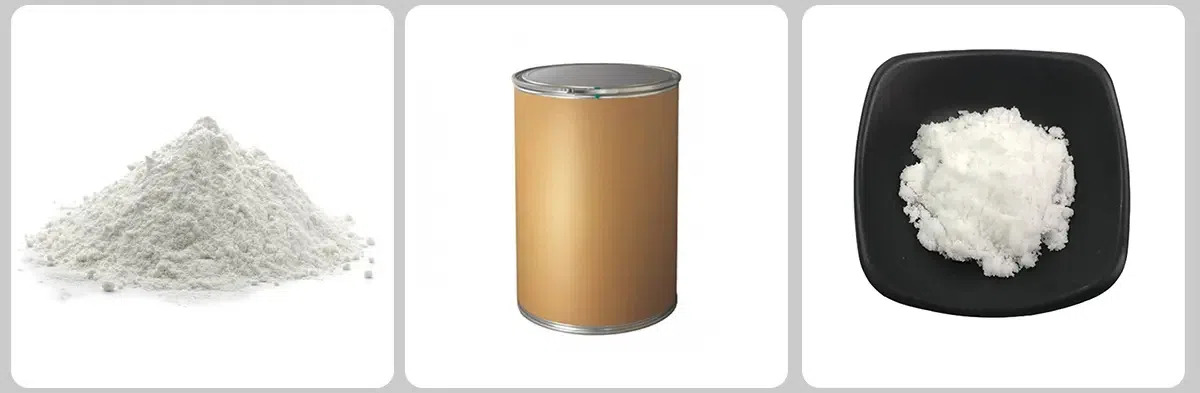
Glycolic acid Chemical Properties
| Melting point | 75-80 °C (lit.) |
| Boiling point | 112 °C |
| density | 1.25 g/mL at 25 °C |
| vapor pressure | 10.8 hPa (80 °C) |
| refractive index | n20/D 1.424 |
| Fp | 112°C |
| storage temp. | Store below +30°C. |
| solubility | H2O: 0.1 g/mL, clear |
| pka | 3.83(at 25℃) |
| form | Solution |
| color | White to off-white |
| PH | 2 (50g/l, H2O, 20℃) |
| Odor | at 100.00 %. odorless very mild buttery |
| Odor Type | buttery |
| Water Solubility | SOLUBLE |
| Sensitive | Hygroscopic |
| Merck | 144,498 |
| BRN | 1209322 |
| Stability: | Stable. Incompatible with bases, oxidizing agents and reducing agents. |
| InChIKey | AEMRFAOFKBGASW-UHFFFAOYSA-N |
| LogP | -1.07 at 20℃ |
| CAS DataBase Reference | 79-14-1(CAS DataBase Reference) |
| NIST Chemistry Reference | Acetic acid, hydroxy-(79-14-1) |
| EPA Substance Registry System | Glycolic acid (79-14-1) |
Safety Information
| Hazard Codes | C |
| Risk Statements | 34-22-20 |
| Safety Statements | 26-36/37/39-45-23 |
| RIDADR | UN 3265 8/PG 3 |
| WGK Germany | 1 |
| RTECS | MC5250000 |
| TSCA | Yes |
| HS Code | 2918 19 98 |
| HazardClass | 8 |
| PackingGroup | II |
| Hazardous Substances Data | 79-14-1(Hazardous Substances Data) |
| Toxicity | LD50 orally in rats: 1.95 g/kg, H. F. Smyth et al., J. Ind. Hyg. Toxicol. 23, 259 (1941) |
Product Application of Glycolic Acid CAS#79-14-1
Glycolic acid acts as an essential chemical feedstock, applied in the manufacture of ethylene glycol, menthyl glycolate and quinine glycolate.
It is also utilized to synthesize tanning agents, hair colorants, leather and fiber dyes, adhesives, metal chelators, petroleum demulsifiers, electroplating additives, aluminum etching solutions, cross-linking agents for cellulosic fabrics, as well as electropolishing agents for stainless steel.
Furthermore, glycolic acid functions as a cleaning and sanitizing agent for food-processing plants and livestock breeding sites, a boiler antiscaling additive, a surface treatment agent for copper and other metals, and an ingredient in skin-care cosmetic formulations.