
Product Description
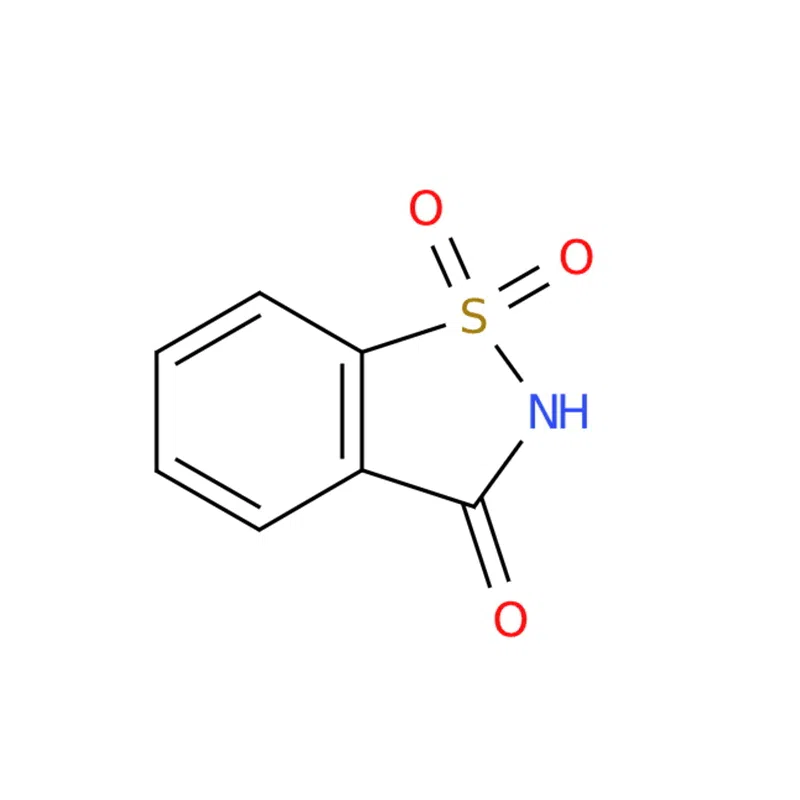
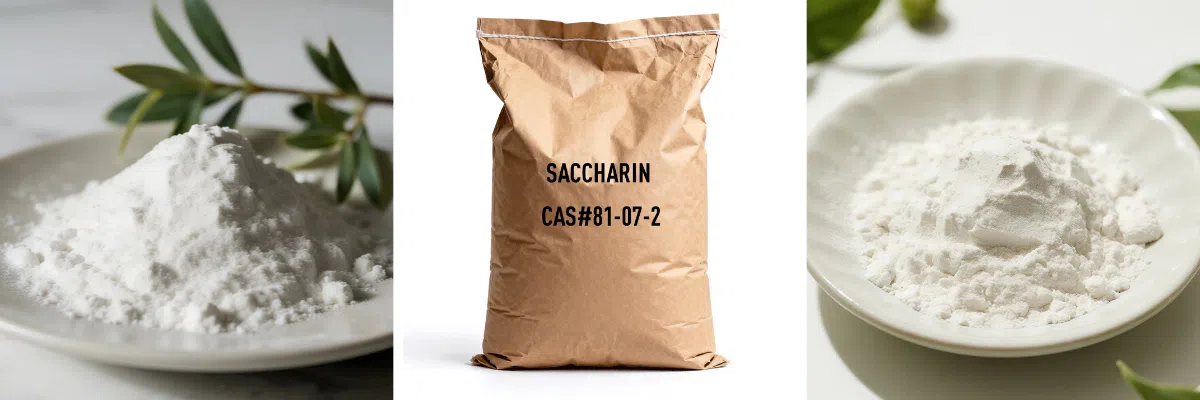
Pure saccharin is a non-toxic, zero-calorie non-nutritive sweetener that cannot be absorbed by the human body. Owing to its sweet flavor, it is extensively used as a sugar replacement in food production. As a food additive, it delivers sweet taste without supplying nutrients, satisfying market demand for sugar-free food items. Commercially available saccharin is generally supplied in its sodium salt form, namely sodium saccharin.
Chemical Properties
| Melting point | 226-229 °C (lit.) |
| Boiling point | subl |
| Density | 0.828 |
| Vapor pressure | 0Pa at 25℃ |
| Refractive index | 1.5500 (estimate) |
| Storage temp | Store below +30°C. |
| Solubility | acetone: soluble1g in 12mL(lit.) |
| Pka | 11.68(at 18℃) |
| Form | Crystals or Crystalline Powder |
| Color | White |
| Odor | odorless |
| Water Solubility | 3.3 g/L (20 ºC) |
| Merck | 148311 |
| BRN | 6888 |
| Stability | Stable. Incompatible with strong oxidizing agents. |
| InChIKey | CVHZOJJKTDOEJC-UHFFFAOYSA-N |
| LogP | -0.024 at 25℃ |
| CAS DataBase Reference | 81-07-2(CAS DataBase Reference) |
| IARC | 3 (Vol. Sup 7, 73) 1999 |
| NIST Chemistry Reference | Saccharin(81-07-2) |
| EPA Substance Registry System | Saccharin (81-07-2) |
Safety Information
| Risk Statements | 40-62-63-68 |
| Safety Statements | 24/25 |
| RIDADR | UN 3077 9/PG 3 |
| WGK Germany | 2 |
| RTECS | DE4200000 |
| TSCA | Yes |
| HazardClass | IRRITANT |
| HS Code | 29251100 |
| Hazardous Substances Data | 81-07-2(Hazardous Substances Data) |
| Toxicity | LD50 oral in mouse: 17gm/kg |
Product Applications
Saccharin, alternatively named o-benzoylsulfonyl imide, serves as a synthetic intermediate for agrochemicals including fungicides and herbicides, such as allylthiazole, metsulfuron-methyl, bensulfuron-methyl, ethametsulfuron-methyl and chlorimuron-methyl.
It also acts as a non-nutritive sweetener, mostly utilized in its sodium or ammonium salt forms. Given its slow dissolution rate in the oral cavity, it is especially well-suited for chewing gum, with a permitted maximum dosage of 0.05 g/kg in Japan (1998).
Furthermore, saccharin is employed in producing pesticide intermediates and sodium saccharin, as well as in formulations that require sweet-taste enhancement for mammals. Additionally, it can inhibit phosphotransferase and phosphohydrolase, and is applied in analytical chemistry fields including thallium detection.