
Product Description
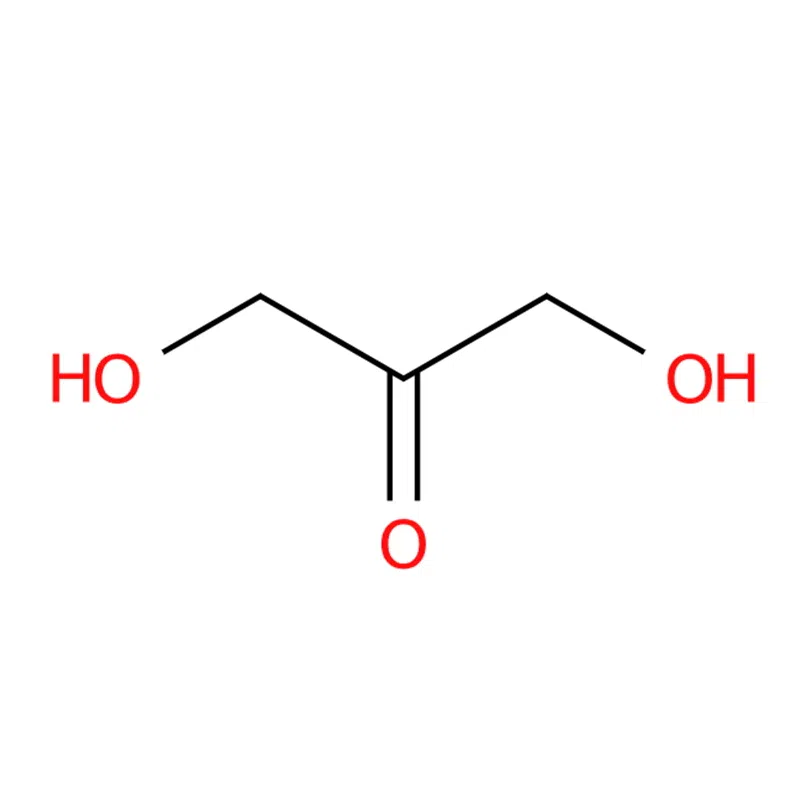
1,3-Dihydroxyacetone is a naturally existing ketose featuring biodegradability, edibility, and non-toxicity to human bodies and the surrounding environment. As a multi-purpose additive, it finds extensive applications in the cosmetic, pharmaceutical, and food sectors.
Chemical Properties
| Melting point | 75-80 °C |
| Boiling point | 107.25°C (rough estimate) |
| Density | 1.1385 (rough estimate) |
| Vapor pressure | 0.002-0.33Pa at 20-50℃ |
| Refractive index | 1.4540 (estimate) |
| FEMA | 4033 | DIHYDROXYACETONE |
| Storage temp | Store at +2°C to +8°C. |
| Solubility | >112.4 mg/mL in DMSO; >5.09 mg/mL in EtOH with ultrasonic |
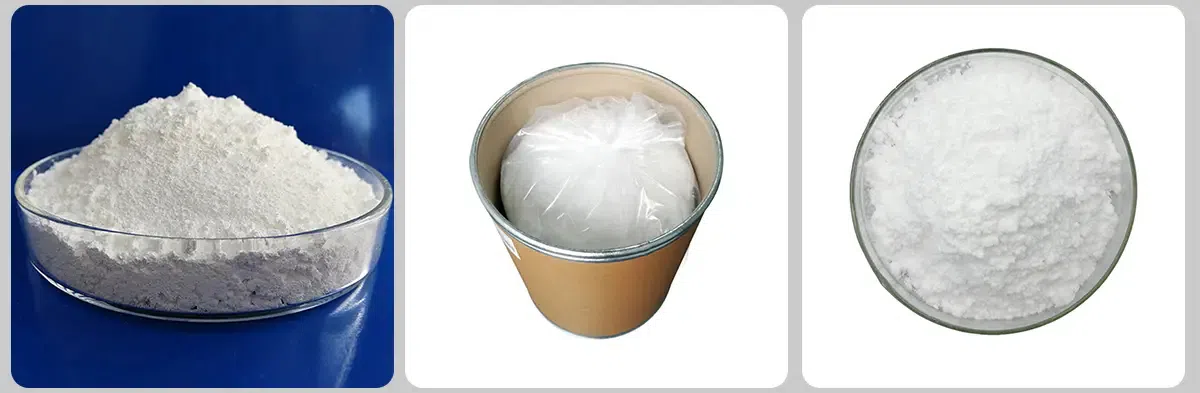
| Form | powder |
| Pka | 12.45±0.10(Predicted) |
| Color | White |
| Odor | at 100.00 %. minty |
| Odor Type | minty |
| Water Solubility | >250 g/L (20 ºC) |
| JECFA Number | 1716 |
| Stability | Stable. Combustible. Hygroscopic. |
| LogP | -1.95 at 20℃ |
| Surface tension | 68.85mN/m at 1g/L and 20℃ |
| CAS DataBase Reference | 96-26-4(CAS DataBase Reference) |
| NIST Chemistry Reference | 2-Propanone, 1,3-dihydroxy-(96-26-4) |
| EPA Substance Registry System | 2-Propanone, 1,3-dihydroxy- (96-26-4) |
| Safety Statements | 24/25 |
| HS Code | 29141900 |
| Hazardous Substances Data | 96-26-4(Hazardous Substances Data) |
| Toxicity | CHROMELIN ? DIHYDROXYACETONE ? 1,3DIHYDROXYACETONE ? 1,3-DIHYDROXYPROPANONE ? DIHYXAL ? NSC-24343 ? OTAN ? OXATONE ? SOLEAL ? 2PROPANONE, 1,3-DIHYDROXY- ? TRIULOSE ? VITICOLOR |
Product Application
1,3-Dihydroxyacetone functions as a pharmaceutical intermediate, chemical feedstock and food additive. Within the pharmaceutical industry, it can be applied in synthesizing specific medications for cardiovascular disease treatment. In cosmetic formulations, it minimizes excessive transepidermal water loss to deliver moisturizing effects, and also shields the skin from sunlight and ultraviolet radiation.