
Products Description of Copper Chromite CAS#12018-10-9
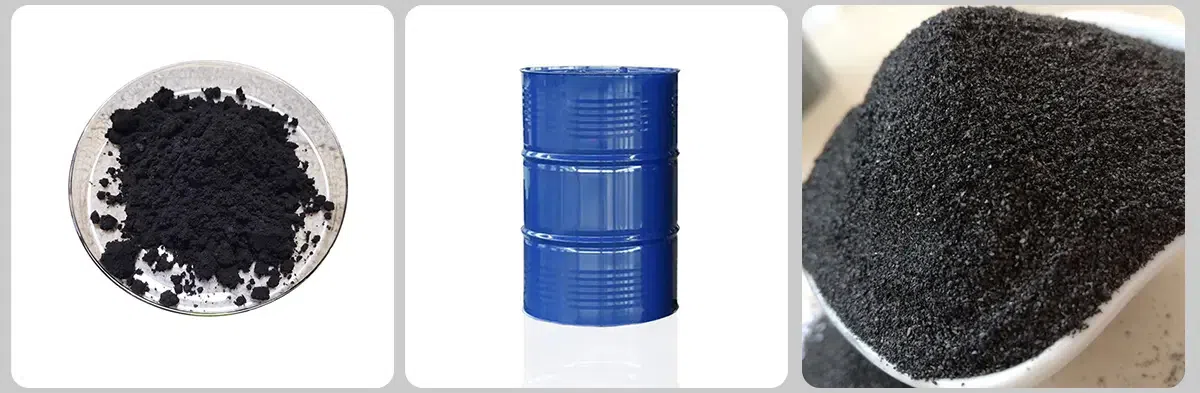
Copper chromite (CAS 12018-10-9) is an inorganic compound widely utilized as a catalytic agent. Its typical chemical forms include CrCuH₂O (molecular weight: 133.56) and Cr₂Cu₂O₅ (molecular weight: 311.08), though its actual structure may differ according to hydration level and crystalline phase. This material occurs as a brown to black powder with a bulk density of roughly 5.400 g/cm³ and a vapor pressure ranging from 0 to 0.08 Pa at 190–200 °C. It exhibits insolubility in water, dilute acids, and concentrated hydrochloric acid.
Copper chromite Chemical Properties
| English Name | Copper chromite |
| English Synonyms | tetraoxid dichromito-menaty;chromium copper oxid;CopperchromitebariumpromotedCrCuOCuOBaO;Cop perchromite,bariumpromoted(62-64%Cr2CuO4,22-24%Cu0,6%BaO,0-4%Graphite,1%6CrO3,1%Cr203);CUPR ICCHROMITE;COPPER(II)CHROMATE(III);COPPER(II)DICHROMATE,DIHYDRATE;chromiumcopperoxide(cr2cu 04) |
| CAS Number | 12018-10-9 |
| Molecular Formula | CrCuH20 |
| Molecular Weight | 133.56 |
| EINECS Number | 234-634-6 |
| density | 5.4 |
| vapor pressure | 0-0.08Pa at 190-200℃ |
| solubility | insoluble in H2O, dilute acid solutions |
| form | Powder |
| color | Brown to black |
| Water Solubility | insoluble H2O, dilute acids, conc HCl [MER06] |
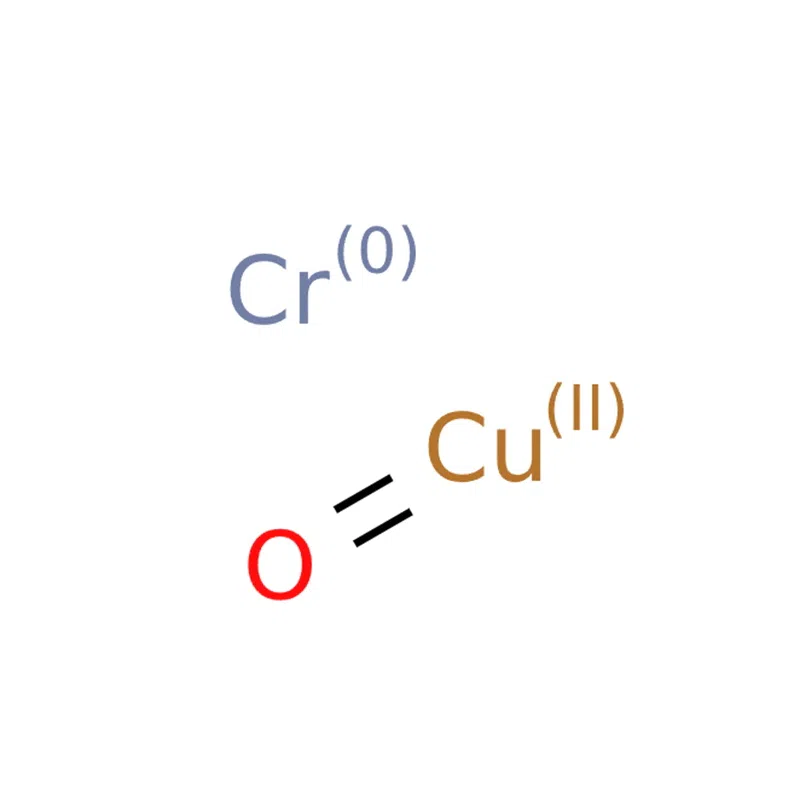
| InChI | InChI=1S/2Cr.Cu.4O |
| InChIKey | FULFYAFFAGNFJM-UHFFFAOYSA-N |
| SMILES | O([Cr]=O)[Cr]=O.O=[Cu] |
| EPA Substance Registry System | Chromium copper oxide (Cr2CuO4) (12018-10-9) |
| Hazard Codes | O,Xi |
| Risk Statements | 8-37-36/37/38-20/21 |
| Safety Statements | 17-24/25-23 |
| RIDADR | UN 1479 5.1/PG 2 |
| WGK Germany | 3 |
| HS Code | 28415000 |
Product Application of Copper Chromite CAS#12018-10-9
Primary Applications: Copper chromite serves as a high-efficiency catalytic material. It is predominantly applied in the aerospace sector as a combustion-rate catalyst for solid propellants. Additionally, it finds use in organic synthetic processes including hydrodehydration, cyclization, and alkylation reactions, as well as in environmental protection fields such as eliminating organic pollutants and carbon monoxide from engine exhaust emissions.