
Product Description
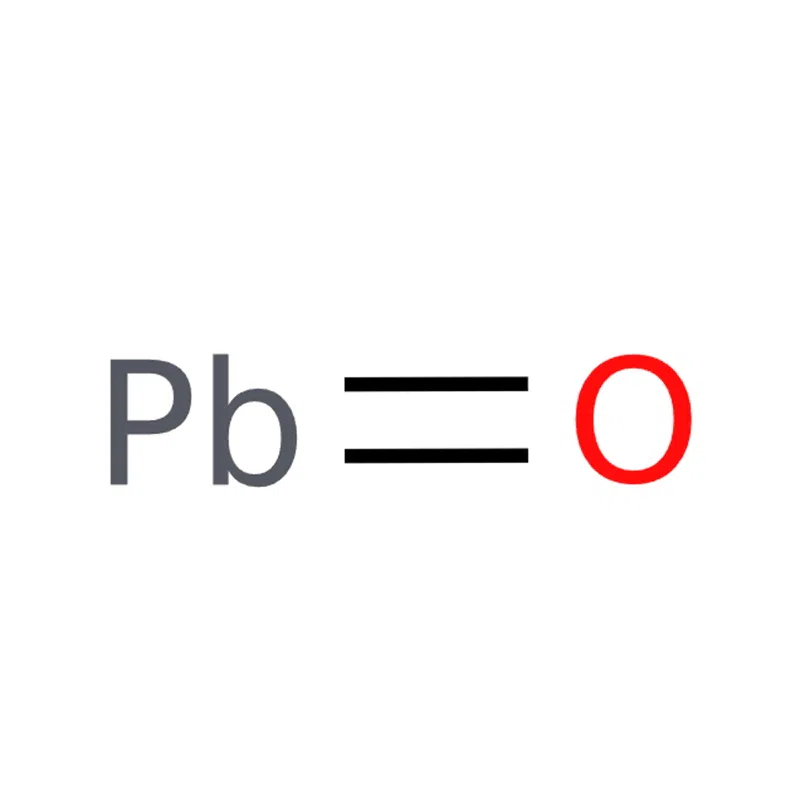
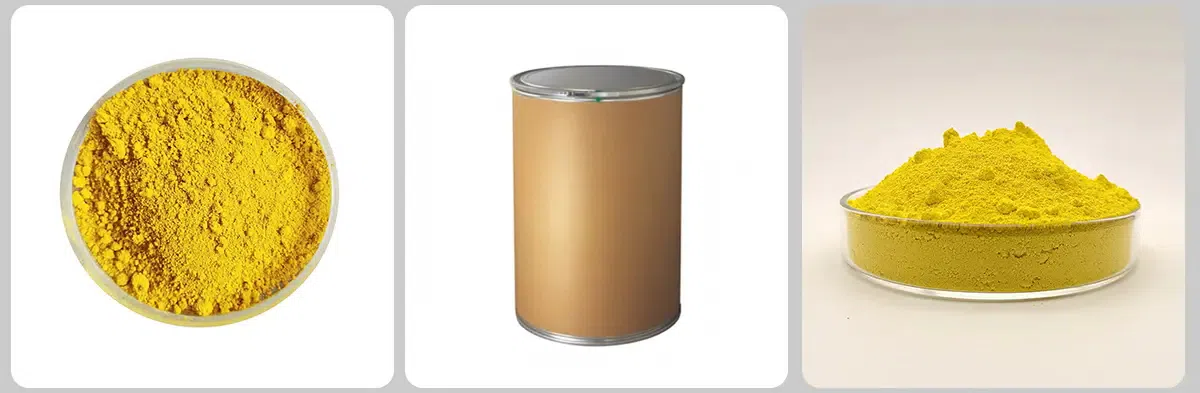
Lead monoxide is an inorganic compound bearing the chemical formula PbO. It occurs as yellow crystalline powder, which is insoluble in water and ethanol yet soluble in nitric acid, acetic acid and hot alkaline solutions.
This substance has extensive industrial applications, serving as a pigment, metallurgical flux and paint drier. It is also utilized as a rubber vulcanization accelerator and a raw material for pesticide manufacturing, alongside other industrial purposes.
Chemical Properties
| Melting point | 886 °C(lit.) |
| Boiling point | 1470 °C |
| Density | 9.53 |
| Vapor pressure | 10 mm Hg ( 0 °C) |
| Refractive index | 2.67 |
| Storage temp | Store below +30°C. |
| Solubility | Soluble in concentrated alkali, HCl and ammonium chloride. Insoluble in dilute alkali and alcohol. |
| Form | powder |
| Color | yellow |
| Specific Gravity | 9.53 |
| PH | 8-9 (100g/l, H2O, 20℃)(slurry) |
| Water Solubility | Soluble in concentrated alkali, hydrochloric acid, and ammonium chloride. Insoluble in water, dilute alkali and alcohol. |
| Hydrolytic Sensitivity | 4: no reaction with water under neutral conditions |
| Merck | 145413 |
| Exposure limits | ACGIH: TWA 0.05 mg/m3 |
| NIOSH: IDLH 100 mg/m3; TWA 0.050 mg/m3 | |
| Stability | Stable. Reacts violently with hydrogen peroxide, strong oxidizing agents, aluminium, zirconium, halogens, sulphur trioxide, boron, silicon, sodium, zinc. |
| CAS DataBase Reference | 1317-36-8(CAS DataBase Reference) |
| NIST Chemistry Reference | Lead monoxide(1317-36-8) |
| EPA Substance Registry System | Lead monoxide (1317-36-8) |
Safety Information
| Hazard Codes | T,N |
| Risk Statements | 61-20/22-33-50/53-62 |
| Safety Statements | 53-45-60-61 |
| RIDADR | UN 2291 6.1/PG 3 |
| WGK Germany | 3 |
| RTECS | OG1750000 |
| TSCA | Yes |
| HS Code | 2824 10 00 |
| HazardClass | 6.1(b) |
| PackingGroup | III |
| Hazardous Substances Data | 1317-36-8(Hazardous Substances Data) |
| Toxicity | LD50 i.p. in rats: 40 mg Pb/100g (Bradley, Fredrick) |
Product Application
Lead monoxide finds extensive use in the manufacturing of PVC plastic stabilizers and acts as a key raw material for synthesizing various lead-based salts. In the paint sector, it reacts with oils to generate lead soaps, which serve as efficient drying agents for coatings.
Furthermore, it is employed to produce high-refractive-index optical glass, ceramic glazes, and flat abrasives intended for precision machine tools. Additionally, it functions as a pharmaceutical raw material and rubber colorant, and is commonly applied in the fabrication of battery plates and petroleum refining operations.