
Product Details
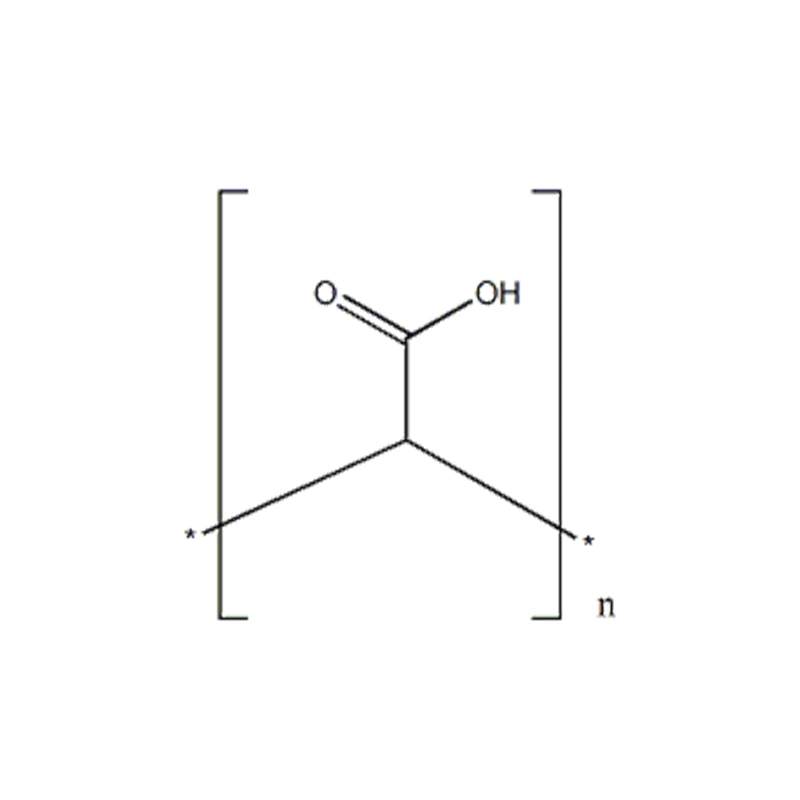
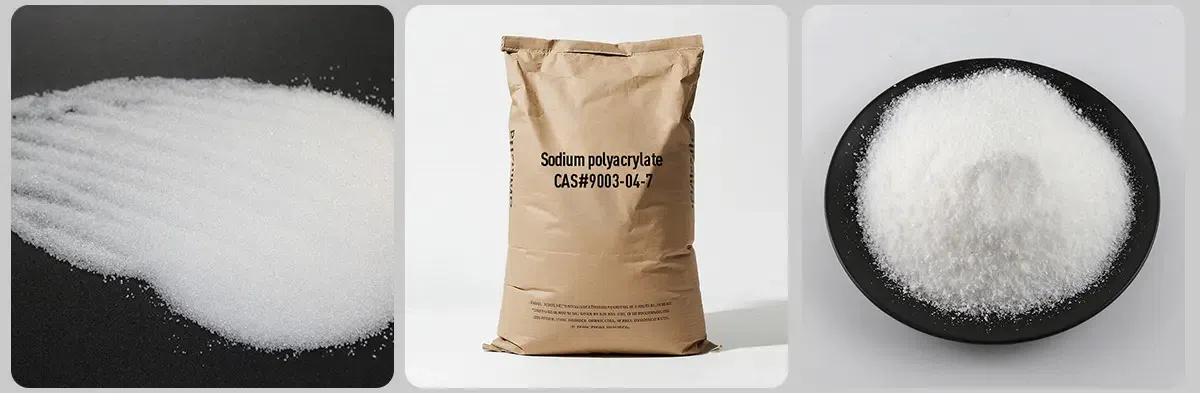
Sodium polyacrylate is a white, odorless, and flavorless powder with strong hygroscopicity. As a high-molecular-weight polymer containing both hydrophilic and hydrophobic functional groups, it slowly dissolves in water to produce a highly viscous, transparent aqueous solution.
A 0.5% sodium polyacrylate solution exhibits notable viscosity, which arises not from water absorption and swelling (as seen with CMC or sodium alginate), but from ionic interactions among abundant anionic groups within the polymer molecules. These interactions extend molecular chains and raise apparent viscosity, yielding a high-viscosity solution roughly 15–20 times thicker than those of CMC or sodium alginate.
Its viscosity remains relatively stable against heat exposure, neutral salts, and organic acids, yet rises under alkaline conditions. Insoluble in organic solvents such as ethanol, sodium polyacrylate maintains thermal stability up to 300 °C. It retains consistent viscosity over long-term storage and resists degradation. Nevertheless, as an electrolyte, its viscosity is sensitive to acids and metal ions—especially divalent and higher-valent metal ions—though such exposure does not cause decomposition of the polymer itself.
Parameters
| Density | 1.32 g/mL at 25 °C |
| refractive index | n20/D 1.43 |
| storage temp. | 2-8°C |
| form | powder |
| Specific Gravity | 1.23 |
| PH Range | 6 - 9 |
| Odor | Odorless |
| PH | 6-9 |
| Hydrolytic Sensitivity | 0: forms stable aqueous solutions |
| Stability: | Stable, but moisture sensitive. |
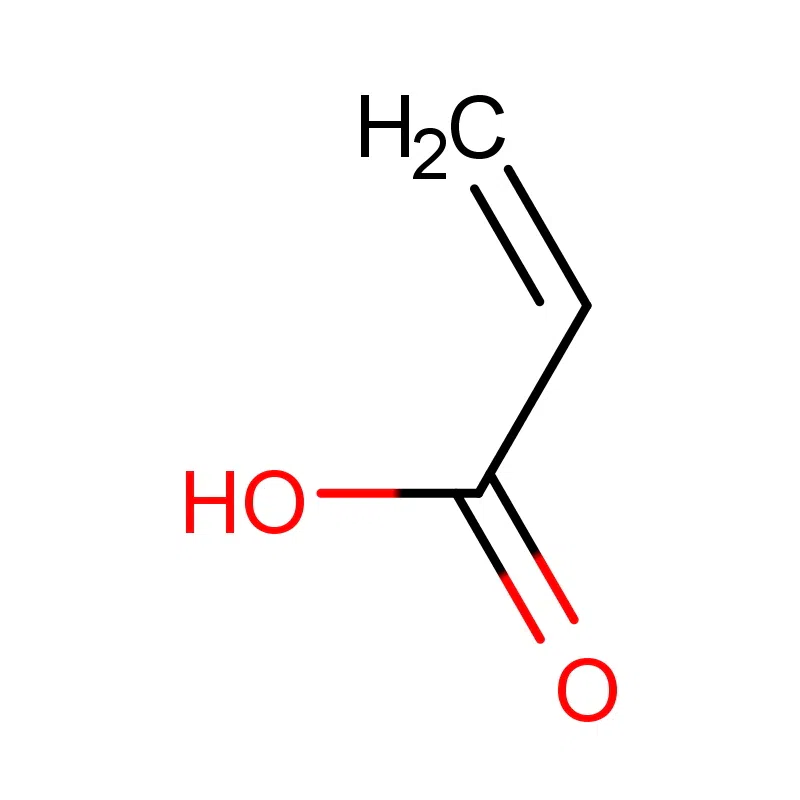
| InChI | InChI=1S/C3H4O2/c1-2-3(4)5/h2H,1H2,(H,4,5) |
| InChIKey | NIXOWILDQLNWCW-UHFFFAOYSA-N |
| SMILES | C(=O)(O)C=C |
| EPA Substance Registry System | Sodium polyacrylate (9003-04-7) |
Safety Information
| Hazard Codes | Xi |
| Risk Statements | 36/37/38-36 |
| Safety Statements | 26-36 |
| WGK Germany | 3 |
| RTECS | WD6826000 |
| F | 3 |
| TSCA | Yes |
| HS Code | 39069090 |
Product Application
Sodium polyacrylate can be used as a scale inhibitor, detergent builder, and processing auxiliary for soaps and detergents, and it also mitigates water hardness issues.
It works well as an absorbent for liquid spills, as well as a water-retention and slow-release agent.
In addition, it performs the roles of a suspending agent, stabilizer, and emulsifier in various applications.