
Product Details
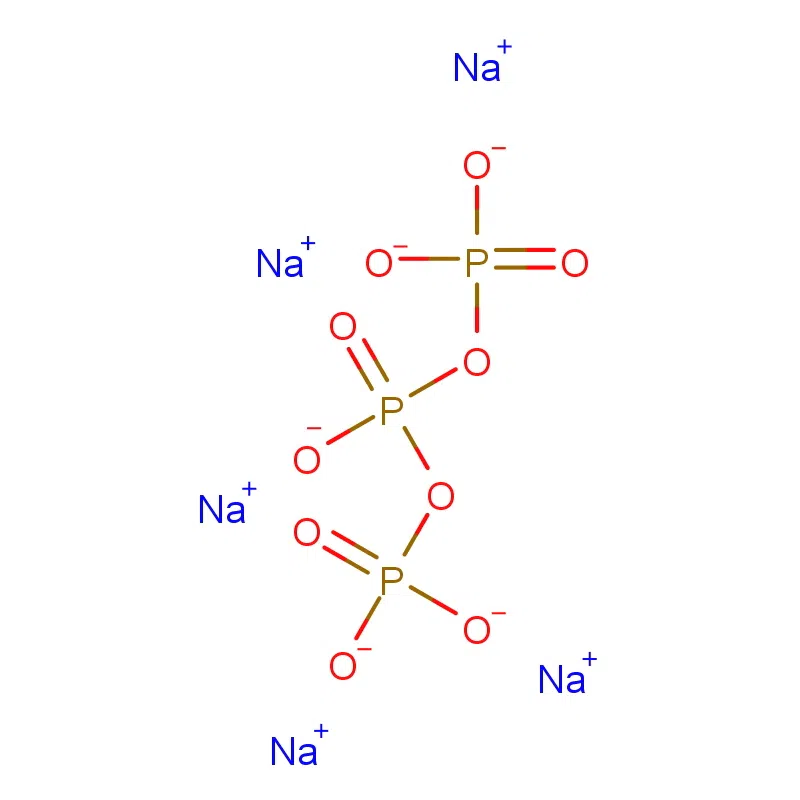
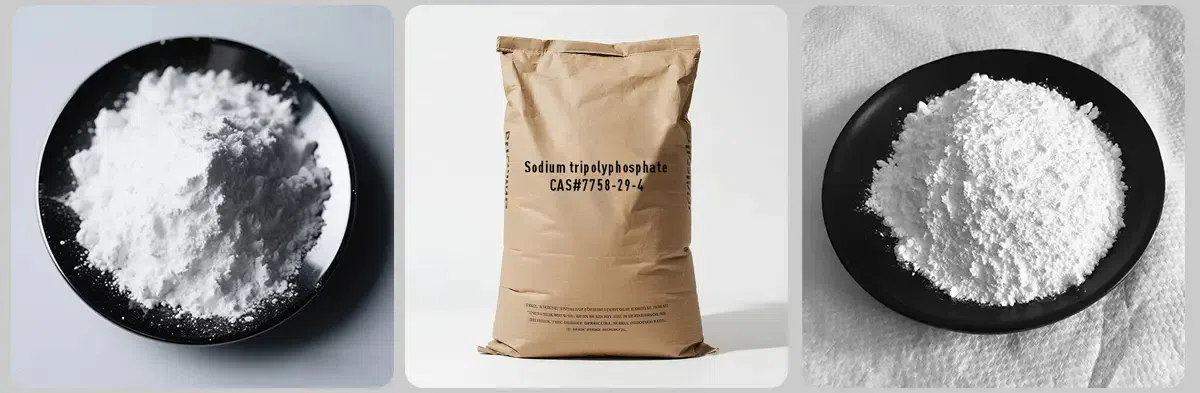
Sodium tripolyphosphate (STPP, molecular formula Na₅P₃O₁₀, CAS No. 7758-29-4) is a white crystalline phosphate chemical. It is extensively applied as a detergent builder (accounting for 50% of global consumption), water softener, and food preservative (E451).
Thanks to its powerful chelating capacity for metal ions including calcium and magnesium ions, it prevents scale formation and enhances cleaning performance. In food processing, it functions to retain moisture in seafood and meat products.
STPP occurs in three crystal phases: Phase I, Phase II and hexahydrate. Among them, Phase II exhibits the best stability and is preferred for industrial applications.
Parameters
| Melting point | 622 °C |
| bulk density | 1000kg/m3 |
| density | 2.52 g/cm3 (20℃) |
| vapor pressure | <0.1 hPa (20 °C) |
| refractive index | 1.658 |
| storage temp. | Storage temperature: no restrictions. |
| solubility | H2O: may be clear to slightly hazy |
| form | Powder/Solid |
| color | White |
| Odor | Odorless |
| PH | 9.0-10.0 (25℃, 1% in H2O) |
| PH Range | 9.5 - 10.3 at 1 g/l at 20 °C |
| Water Solubility | 20 g/100 mL (20 ºC) |
| Sensitive | Hygroscopic |
| Merck | 14,8697 |
| Stability: | Stable. Incompatible with strong oxidizing agents, strong acids. Hygroscopic. |
| InChIKey | HWGNBUXHKFFFIH-UHFFFAOYSA-I |
| LogP | -4.691 (est) |
CAS DataBase Reference | 7758-29-4(CAS DataBase Reference) |
| EPA Substance Registry System | Sodium tripolyphosphate (7758-29-4) |
Safety Information
| Hazard Codes | Xi |
| Risk Statements | 36/37/38 |
| Safety Statements | 26-36-24/25 |
| WGK Germany | 1 |
| RTECS | YK4570000 |
| F | 3 |
| TSCA | Yes |
| HS Code | 28353110 |
Hazardous Substances Data | 7758-29-4(Hazardous Substances Data) |
| Toxicity | LD50 orally in rats: 6.50 g/kg (Smyth) |
Product Application
Sodium tripolyphosphate has diverse industrial and functional applications, including water softening, heavy-duty fabric laundering, automatic dishwashing, drilling fluid purification, and liquid cattle feed supplementation.
It also acts as a peptizing, emulsifying and dispersing agent, as well as a stabilizer for hydrogen peroxide solutions. In addition, it serves as a preservative for seafood, meat, poultry and animal feeds. Within polysaccharide-based drug delivery systems, it functions as a polyanionic cross-linker.
This compound can be used to seal leaking farm ponds and as a chelating agent for calcium and magnesium ions. Further uses cover ceramics production, leather tanning, flame retardants, paper pulping and coating, textile finishing, mineral flotation, anti-corrosive pigments, and rubber manufacturing.