
Polyethylene (PE) was first synthesized accidentally by the German chemist Hans von Pechmann during an experimental process. which marked the beginning of a new field in polymer synthesis. Polyethylene has many varieties, which are generally classified according to their density differences into low-density polyethylene (LDPE), high-density polyethylene (HDPE), linear low-density polyethylene (LLDPE), and other products with special properties.
1.1 Low-Density Polyethylene (LDPE)
Low-density polyethylene is the earliest industrialized type of polyethylene and is also known as high-pressure low-density polyethylene. The resulting polyethylene exhibited excellent transparency and flexibility, representing the first major historical breakthrough in ethylene polymerization technology.
LDPE has a low density and demonstrates good impact resistance and low-temperature resistance. It also possesses excellent flowability and electrical insulation properties, low water vapor permeability, and stable chemical properties. Except for strong oxidizing acids, LDPE is generally resistant to corrosion from acids, alkalis, and salts. LDPE is widely used in the production of packaging films, agricultural films, and other products. Its first commercial application was as an insulating coating for electrical wires. However, LDPE generally has a relatively low crystallinity, poor mechanical strength, and limited heat resistance.
LDPE is used in the production of injection-molded products, pharmaceutical and food packaging materials, blow-molded hollow products, and medical equipment. However, its primary application is in film products, such as agricultural films and packaging films.
1.2 High-Density Polyethylene (HDPE)
High-density polyethylene is a highly crystalline, non-polar thermoplastic resin. It is usually produced through polymerization using Ziegler-Natta catalysts. The process is carried out in tubular or stirred-tank low-pressure reactors, using ethylene as the raw material and oxygen or organic peroxides as initiators to promote the polymerization reaction.
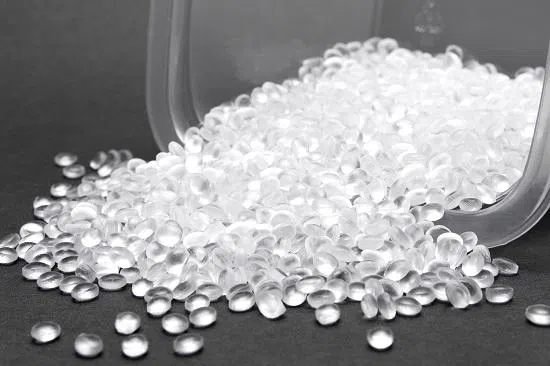
Under normal conditions, HDPE appears as a white powder or granular product. It is non-toxic and odorless, with a density ranging from 0.940 to 0.976 g/cm³ and a crystallinity of 80%–90%. Its operating temperature can reach up to 100°C. Compared with LDPE, HDPE has superior hardness, tensile strength, and creep resistance. It also exhibits excellent wear resistance, electrical insulation properties, toughness, and low-temperature resistance. HDPE has good chemical stability; at room temperature, it is insoluble in organic solvents and resistant to corrosion from acids, alkalis, and various salts. HDPE films have low permeability to water vapor and air, as well as low water absorption.
Different grades of HDPE are produced by appropriately adjusting four variables: density, relative molecular mass, molecular weight distribution, and additives, allowing the material to achieve different performance characteristics for various applications. Due to its unique properties, HDPE is widely used in industrial and daily-life applications. It has a high dielectric strength, making it suitable for electrical wires and cables, and it maintains excellent impact resistance even at low temperatures.
1.3 Linear Low-Density Polyethylene (LLDPE)
Linear low-density polyethylene is produced by copolymerizing ethylene with comonomers such as 1-butene and 1-hexene under polymerization conditions using highly efficient Ziegler-Natta catalysts. The density of LLDPE generally ranges from 0.915 to 0.940 g/cm³.
LLDPE products are non-toxic, odorless, and appear as milky white granules. Compared with LDPE, LLDPE has higher strength, greater stiffness, improved toughness, better resistance to cold and heat, as well as excellent tear resistance and environmental stress cracking resistance. It is also resistant to acids, alkalis, and organic solvents.
LLDPE exhibits excellent mechanical properties, chemical stability, and processing performance. Films produced from LLDPE have high tear strength, strong resistance to stress cracking, excellent dart impact strength, tear resistance, and optical properties. Therefore, LLDPE can be used as a protective layer for cables.
Currently, LLDPE occupies a significant proportion of the traditional polyethylene market. Its applications include pipes, molded products, cables, and films, with particularly strong advantages in the field of packaging films.