Product Details
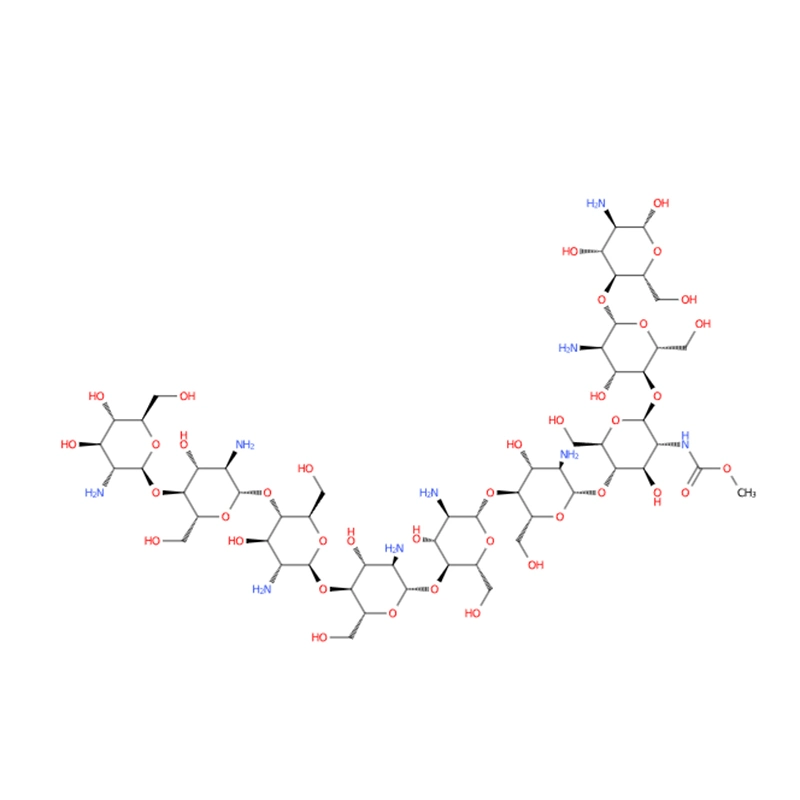
Chitosan is also known as deacetylated chitosan, deacylated chitosan, soluble chitin, or soluble chitin. It is an amorphous solid that is almost insoluble in water but soluble in organic acids such as formic acid, acetic acid, benzoic acid, and cyclohexanoic acid, as well as in dilute inorganic acids. Industrial-grade products appear as white or off-white translucent flaky solids with a slight pearly luster. Chitosan is odorless, non-toxic, and easily degradable, and it is a rare natural cationic polyelectrolyte. It is a polysaccharide obtained by removing the acetyl groups from chitin glycosides through strong alkaline hydrolysis or enzymatic decomposition. It is soluble in low-acidity aqueous solutions, exhibits good biocompatibility, is non-antigenic, and remains insoluble in human body fluids. It is produced using chitin—which is widely found in nature in the shells of lower animals and plants, such as arthropods (shrimp and crabs)—as the raw material, through a deacetylation reaction involving alkali and heat.
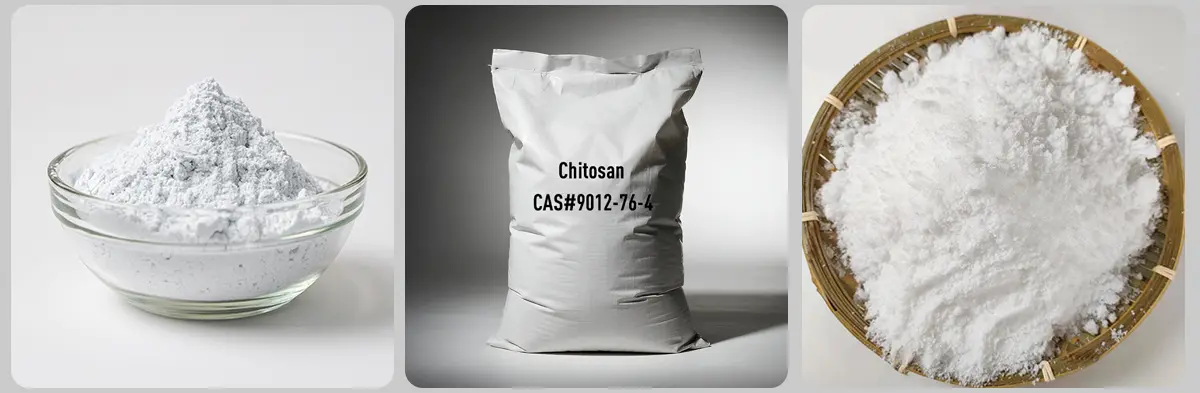
Chemical Properties
| English name | Chitosan |
| English synonyms | Chitosan from shrimp shells;kytexm;poliglusam; seacuref; seacureplus; CHITOSANNANOPARTICLES; LOWMOL ECULARWEIGHTCHITOSAN;HIGHMOLECULARWEIGHTCHITOSAN |
| CAS number | 9012-76-4 |
| Molecular formula | C6H11NO4X2 |
| Molecular weight | 161.16 |
| EINECS number | 618-480-0 |
| Melting point | 102.5°C |
| Density | 1 g/cm³ |
| Bulk density | 0.15-0.3 g/cm³ |
| Storage conditions | 2-8°C |
| Solubility | Soluble in dilute aqueous acid (pH < 6.5) |
| Form | Coarse flakes and powder |
| Color | White to off-white |
| Odor | Odorless |
| Water solubility | H₂O: insoluble. Organic solvents: insoluble. |
| Stability | Stable. Incompatible with strong oxidizing agents. |
Product Application
Chitosan is a biocompatible, antibacterial, and biodegradable polyelectrolyte with a wide range of biomedical and industrial applications, primarily in the food, pharmaceutical, agricultural seed, daily chemical, and industrial wastewater treatment sectors. Chitosan oligosaccharides have been shown to enhance immunity, activate cells, prevent cancer, lower blood lipids and blood pressure, combat aging, and regulate the body's internal environment, finding use in medicine, healthcare, and the food industry. In the environmental protection sector, chitosan can be applied in wastewater treatment, protein recovery, and water purification. In the functional materials sector, it serves as membrane materials, carriers, adsorbents, fibers, and medical materials. In the textile industry, chitosan is used in fabric finishing, health-care underwear, and papermaking additives. In agriculture, it functions as a feed additive, seed treatment agent, soil improver, and fruit preservative. In the tobacco industry, chitosan acts as a high-performance adhesive for tobacco sheets, improving taste and burn quality without toxicity or odor.