
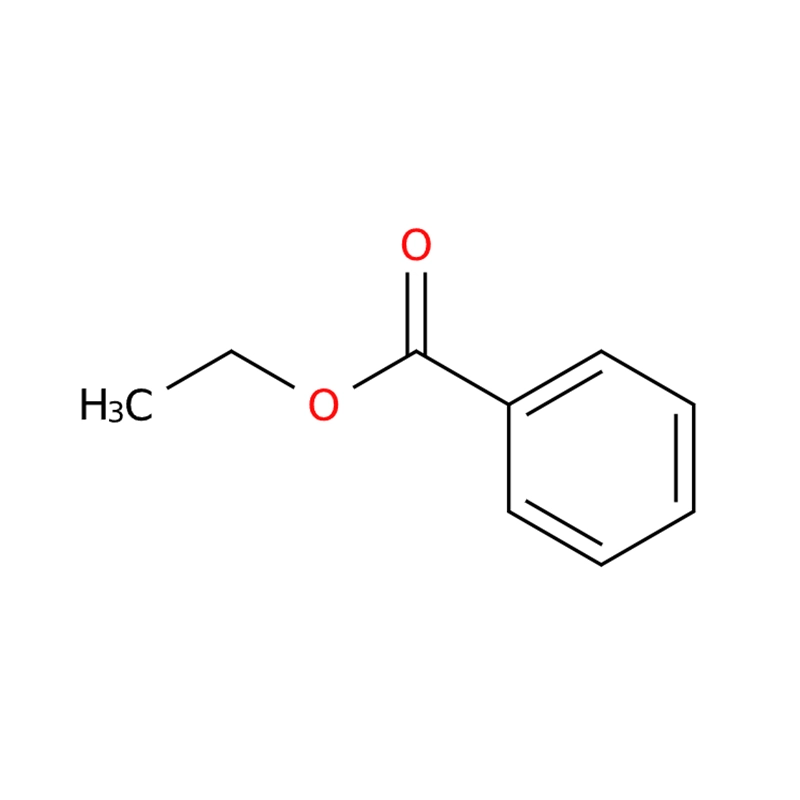
Product Details
Ethyl benzoate is a colorless liquid at ambient temperature and pressure, with a fragrance reminiscent of wintergreen oil and ylang-ylang oil, making it a popular choice as a food and flavor additive. This compound is versatile in chemical reactions, including hydrolysis, in which it can be broken down into benzoic acid and ethanol. This hydrolysis typically occurs under acidic conditions—for example, when sulfuric acid is used as a catalyst to yield benzoic acid and ethanol.
Additionally, ethyl benzoate can undergo esterification reactions, in which it reacts with alcohols in the presence of an acid catalyst to form various ester compounds. It is also capable of undergoing reduction, where it can be converted into benzyl alcohol and ethanol through reduction processes.
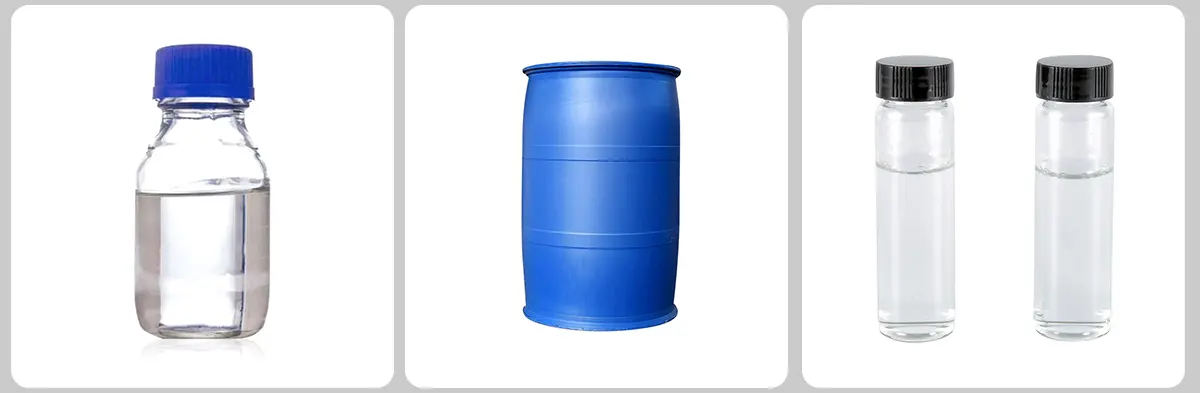
Chemical Properties
| Melting point | -34 °C |
| Boiling point | 212 °C(lit.) |
| density | 1.045 g/mL at 25 °C(lit.) |
| vapor density | 5.17 (vs air) |
| vapor pressure | 1 mm Hg ( 44 °C) |
| refractive index | n20/D 1.504(lit.) |
| FEMA | 2422 | ETHYL BENZOATE |
| Fp | 184 °F |
| storage temp | Store below +30°C. |
| solubility | 0.5g/l |
| form | Liquid |
| color | Clear colorless to pale yellow |
| Odor | at 100.00 %. fruity dry musty sweet wintergreen |
| Relative polarity | 0.228 |
| biological source | synthetic |
| Odor Type | minty |
| explosive limit | 1%(V) |
| Water Solubility | INSOLUBLE |
| Merck | 14,3766 |
| JECFA Number | 852 |
| BRN | 1908172 |
| Dielectric constant | 6.0(20℃) |
| Stability | Stable. Combustible. Incompatible with strong oxidizing agents. |
| LogP | 2.59 at 23℃ |
| CAS DataBase Reference | 93-89-0(CAS DataBase Reference) |
| NIST Chemistry Reference | Benzoic acid, ethyl ester(93-89-0) |
| EPA Substance Registry System | Benzoic acid, ethyl ester (93-89-0) |
Safety Information
| Hazard Codes | N |
| Risk Statements | 51/53 |
| Safety Statements | 24/25-61 |
| RIDADR | UN 3082 9 / PGIII |
| WGK Germany | 1 |
| RTECS | DH0200000 |
| Autoignition Temperature | 914 °F |
| TSCA | Yes |
| HS Code | 29163100 |
| Toxicity | LD50 orally in rats: 6.48 g/kg, Smyth et al., Arch. Ind. Hyg. Occup. Med. 10, 61 (1954) |