
Product Details
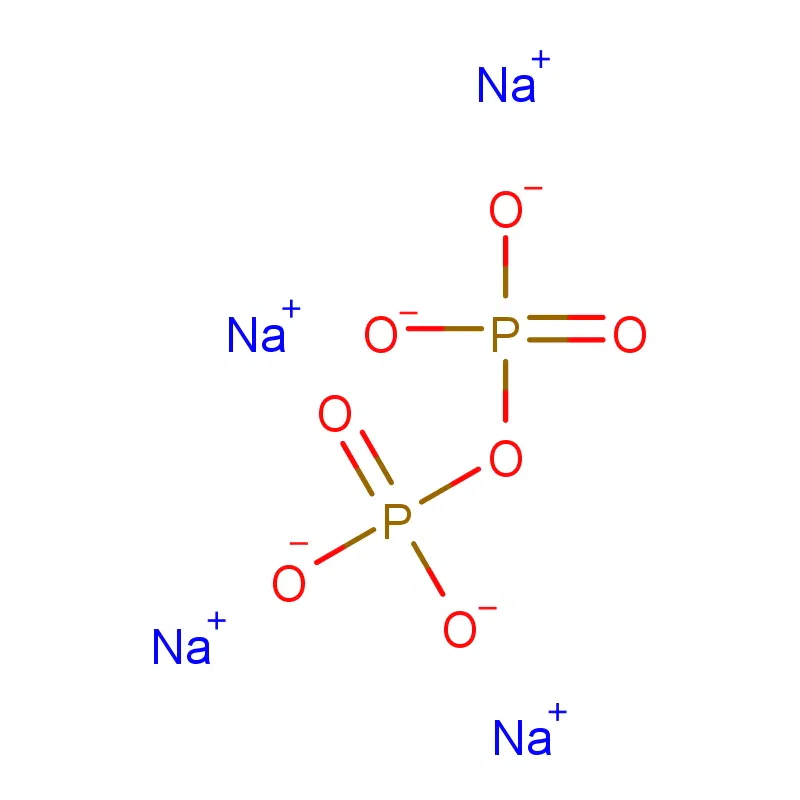
Sodium pyrophosphate, also called tetrasodium pyrophosphate (TSPP), is frequently employed as a buffering agent in laboratory settings. It is proven suitable for formulating EDTA-sodium pyrophosphate extraction buffers used to detect microcystins in soil specimens.
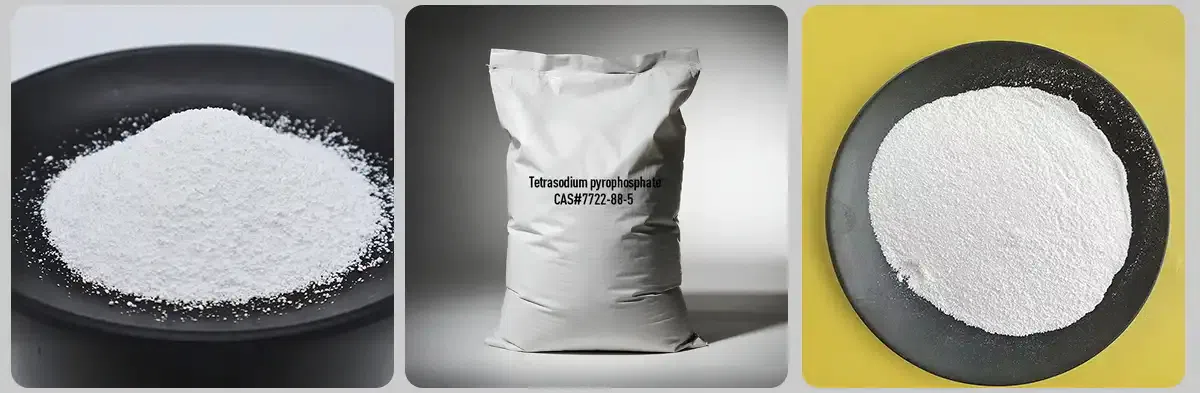
This chemical appears as an odorless white powder or granular solid. Tetrasodium pyrophosphate (also referred to as sodium pyrophosphate, tetrasodium diphosphate or TSPP) is a weakly alkaline coagulant, emulsifier and sequestering agent with a pH value of 10. It has moderate water solubility, dissolving at 0.8 g per 100 mL at 25 °C.
Parameters
| Melting point | 80 °C |
| Boiling point | 93.8 °C |
| density | 2.53 g/mL at 25 °C(lit.) |
| vapor pressure | 0Pa at 20℃ |
| storage temp. | Inert atmosphere,Room Temperature |
| solubility | H2O: 0.1 M at 20 °C, clear, colorless |
| form | Granular |
| color | White |
| Specific Gravity | 2.534 |
| Odor | Odorless |
| PH Range | 10.3 |
| Water Solubility | Soluble in water. Insoluble in ethyl alcohol. |
| Sensitive | Hygroscopic |
| Merck | 14,9240 |
| Exposure limits | NIOSH: TWA 5 mg/m3 |
| Stability: | Stable. Incompatible with strong oxidizing agents. |
| InChIKey | FQENQNTWSFEDLI-UHFFFAOYSA-J |
| LogP | -3.42 |
CAS DataBase Reference | 7722-88-5(CAS DataBase Reference) |
EPA Substance Registry System | Tetrasodium pyrophosphate (7722-88-5) |
Safety Information
| Hazard Codes | Xi,Xn |
| Risk Statements | 36/37/38-41-22 |
| Safety Statements | 26-36-39 |
| OEB | B |
| OEL | TWA: 5 mg/m3 |
| WGK Germany | 3 |
| RTECS | UX7350000 |
| TSCA | Yes |
| HS Code | 28353990 |
Hazardous Substances Data | 7722-88-5(Hazardous Substances Data) |
Product Application
It has broad industrial applications, acting as a water softener, buffer, thickener, dispersant, wool degreaser, metal cleaner, builder for soaps and synthetic detergents, and general sequestering agent in metal electrodeposition processes. Furthermore, it is incorporated into toothpaste and dental floss for tartar prevention, and applied as a chelating agent in antimicrobial research. As a permitted food additive, it is also used in chicken nuggets, crab meat, canned tuna and other food products to improve quality.
In uncooked instant puddings, it acts as a coagulant to deliver thickening effects. When added to cheese, it reduces meltability and inhibits fat separation. As a dispersing agent, it is incorporated into malted milk and chocolate drink powders, and prevents crystal formation in canned tuna.
This non-toxic, biocompatible substance can be utilized as an electroactive medium for stripping surface coatings, in addition to being widely applied as an additive within the food industry.