
Product Details
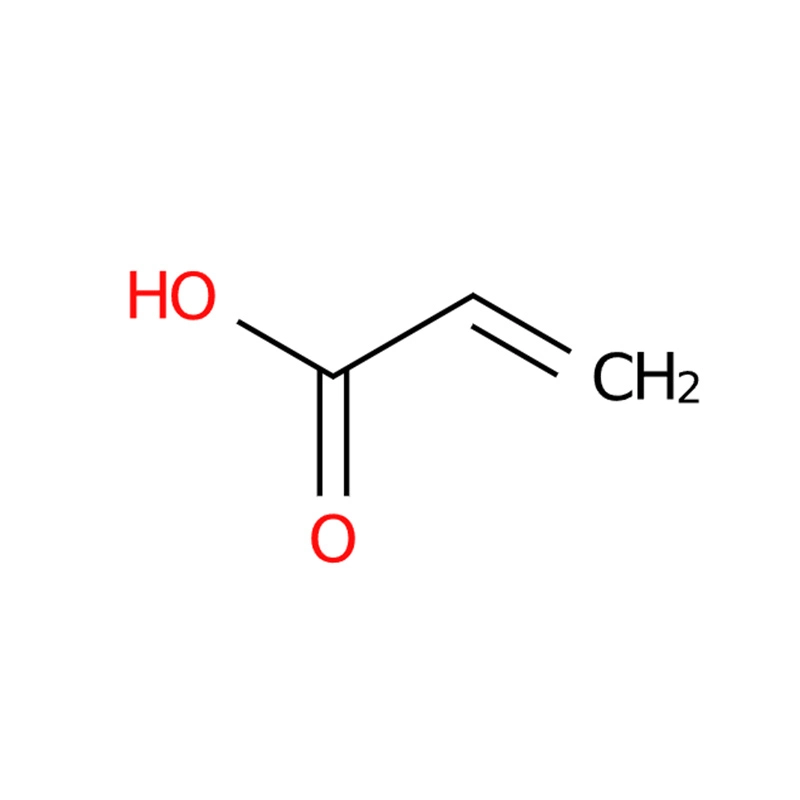
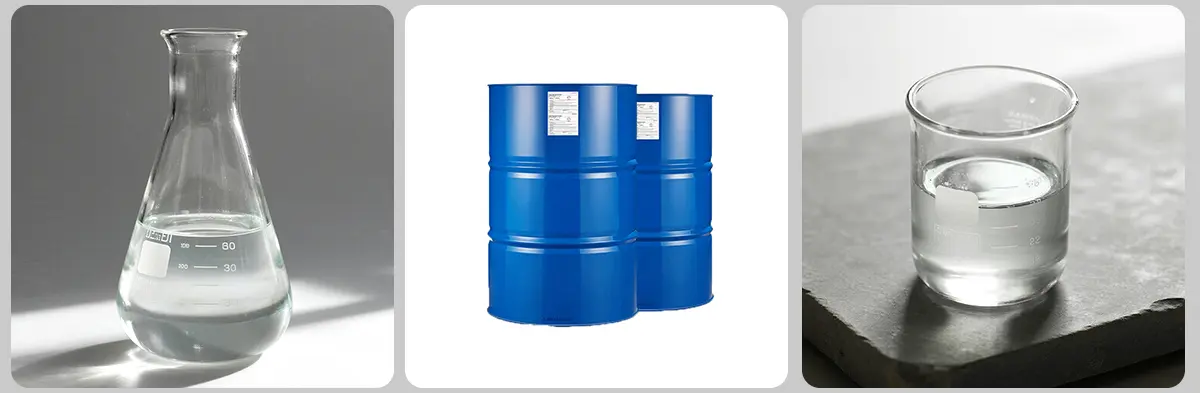
Acrylic acid is the simplest unsaturated carboxylic acid, with a molecular structure composed of a vinyl group and a carboxyl group. Pure acrylic acid is a colorless, clear liquid with a characteristic pungent odor. It has a density of 1.0511, a melting point of 14 °C, and a boiling point of 140.9 °C. The compound is highly acidic and corrosive. It is soluble in water, ethanol, and ether. Its chemical properties are active, and it readily polymerizes to form a transparent white powder. Reduction of acrylic acid produces propionic acid. Addition of hydrochloric acid yields 2-chloropropionic acid, which is used in the preparation of acrylic resins and other organic syntheses. Acrylic acid can be obtained through the oxidation of acrolein or the hydrolysis of acrylonitrile. It can also be synthesized from acetylene, carbon monoxide, and water, or via the pressurized oxidation of ethylene and carbon monoxide.
Chemical Properties
| English name | Acrylic acid |
| English synonyms | Propensaure;Rcra waste number U008;rcrawastenumberu008;Vinylformic acid;vinylformicacid;ETHYLENECA RBOXYLIC ACID;2-PROPENOIC ACID;acrylic acid anhydrous |
| CAS number | 79-10-7 |
| Molecular formula | C3H402 |
| Molecular weight | 72.06 |
| EINECS number | 201-177-9 |
| Mol file | 79-10-7.mol |
| Melting point | 13 °C (lit.) |
| Boiling point | 139 °C (lit.) |
| Density | 1.051 g/mL at 25 °C (lit.) |
| Vapor density | 2.5 (vs air) |
| Vapor pressure | 4 mm Hg (20°C) |
| Storage conditions | Store at +15°C to +25°℃. |
| Solubility | 1000 g/L |
| Form | Liquid |
| Acidity coefficient (pKa) | 4.25(at 25°℃) |
| Color | Transparent |
| Odor | Pungent odor |
| pH | 3.68(1 mM solution);3.14(10 mM solution);2.63(100 mM solution); |
Product Application
Acrylic acid and its series of products are widely used in many sectors, including coatings, plastics, textiles, leather, papermaking, building materials, packaging materials, and others. Acrylic acid and its esters can be used in both organic synthesis and polymer synthesis, with the vast majority being applied to the latter. They are often copolymerized with other monomers such as vinyl acetate, styrene, and methyl methacrylate to produce synthetic resins with various properties, functional polymer materials, and a variety of additives. A major application area is warp yarn sizing agents, prepared from raw materials such as acrylic acid, methyl acrylate, ethyl acrylate, acrylonitrile, and ammonium polyacrylate. These sizing agents have a higher desizing capacity than polyvinyl alcohol-based sizing agents, thereby saving starch and other materials.