
Product Description
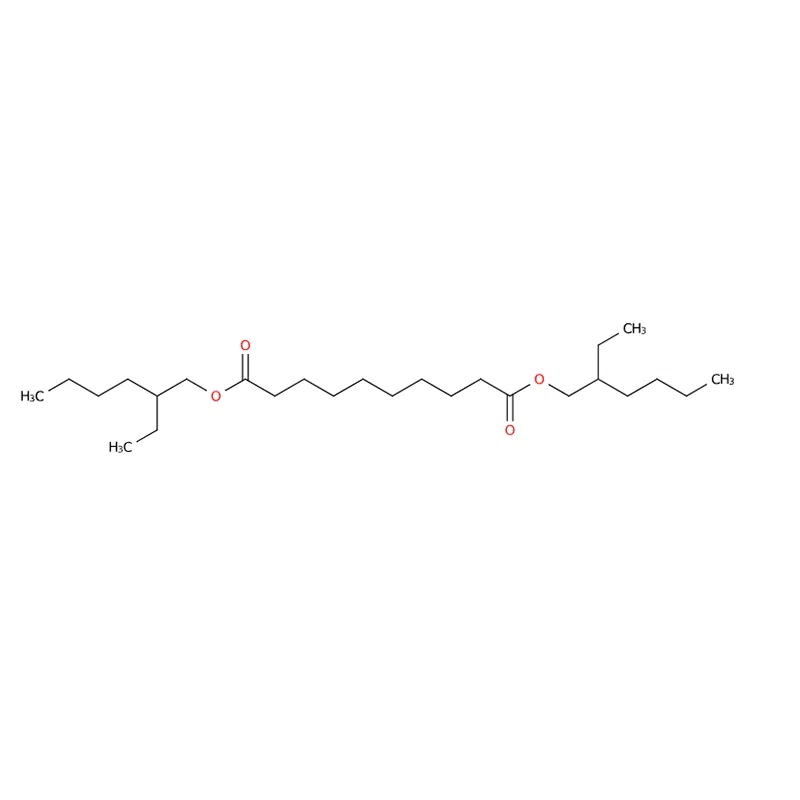
Dioctyl sebacate, alternatively named bis(2-ethylhexyl) sebacate (DOS), is synthesized by the esterification reaction between sebacic acid and 2-ethylhexanol. It demonstrates broad compatibility with polyvinyl chloride (PVC), vinyl chloride copolymers, nitrocellulose, ethyl cellulose and synthetic rubbers.
This plasticizer delivers high plasticizing efficiency and low volatility, coupled with remarkable cold resistance, favorable thermal stability, light fastness and electrical insulation performance. Furthermore, it exhibits excellent lubricity upon heating, which enhances the surface finish and tactile characteristics of final products.
Dioctyl sebacate is particularly well-suited for manufacturing cold-resistant wire and cable materials, artificial leather, films, plates and sheets.
Chemical Properties
| Melting point | -55 °C |
| Boiling point | 212 °C1 mm Hg(lit.) |
| Density | 0.914 g/mL at 25 °C(lit.) |
| Vapor pressure | <0.01 hPa (20 °C) |
| Refractive index | n20/D 1.450(lit.) |
| Fp | >230 °F |
| Storage temp | Store below +30°C. |
| Solubility | <1g/l |
| Form | Liquid |
| Color | Clear slightly yellow |
| Water Solubility | <0.1 g/L (20 ºC) |
| Merck | 141251 |
| BRN | 1806504 |
| Stability | Stable. Combustible. Incompatible with strong oxidizing agents. |
| InChIKey | VJHINFRRDQUWOJ-UHFFFAOYSA-N |
| LogP | 9.722 (est) |
| CAS DataBase Reference | 122-62-3(CAS DataBase Reference) |
| NIST Chemistry Reference | Decanedioic acid, bis(2-ethylhexyl) ester(122-62-3) |
| EPA Substance Registry System | Bis(2-ethylhexyl) sebacate (122-62-3) |
Safety Information
| Safety Statements | 24/25 |
| WGK Germany | - |
| RTECS | VS1000000 |
| TSCA | Yes |
| HS Code | 29171390 |
| Hazardous Substances Data | 122-62-3(Hazardous Substances Data) |
| Toxicity | mouse,LD50,oral,9500mg/kg (9500mg/kg),"Toxicometric Parameters of Industrial Toxic Chemicals Under Single Exposure," Izmerov, N.F., et al., Moscow, Centre of International Projects, GKNT, 1982Vol. -, Pg. 62, 1982. |
Product Application
Dioctyl sebacate functions as a low-temperature plasticizer and is additionally incorporated into synthetic lubricant formulations for jet engines. It exhibits broad compatibility with polyvinyl chloride (PVC), vinyl chloride copolymers, nitrocellulose, ethyl cellulose, and synthetic rubbers.
This material provides efficient plasticizing performance alongside low volatility, as well as outstanding cold resistance, favorable thermal stability, light fastness, and electrical insulation capabilities. Moreover, its superior lubricating property at elevated temperatures improves the surface appearance and tactile performance of end-use products.
It is particularly ideal for producing cold-resistant wire and cable compounds, artificial leather, films, plates and sheets.