
Product Description
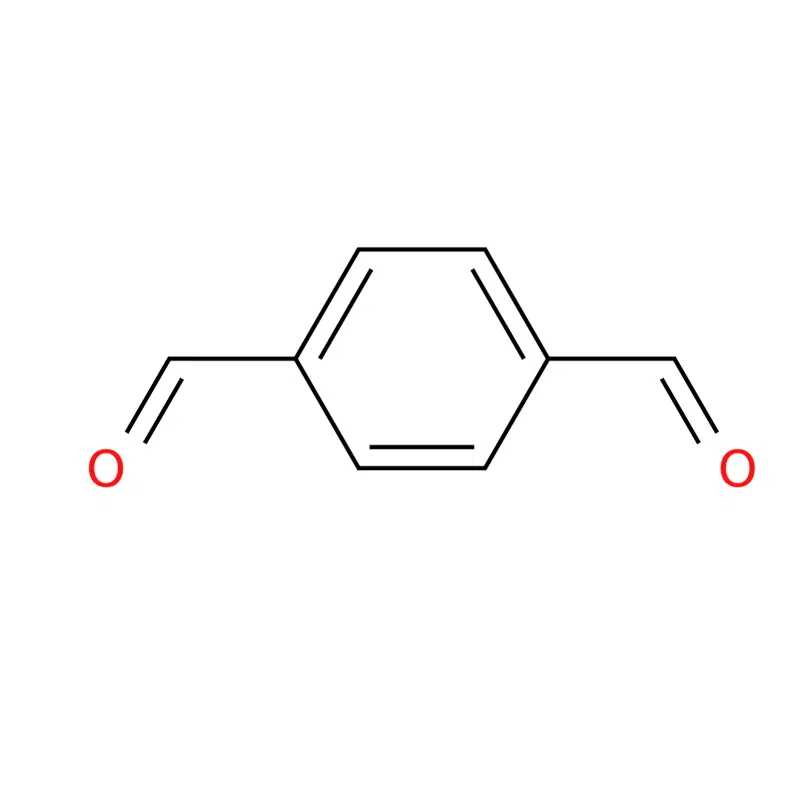
Terephthalaldehyde is a vital fine-chemical intermediate synthesized from para-xylene. Its molecular structure features two reactive aldehyde groups, which allow it to self-polymerize or copolymerize with other monomers to yield a range of polymer materials. Such polymers are extensively utilized in manufacturing fluorescent materials, catalyst supports and other high-performance macromolecular products.
Conventionally, terephthalaldehyde is prepared by first chlorinating para-xylene, followed by hydrolysis with nitric acid or metal oxides acting as catalysts.
Chemical Properties
| Melting point | 114-116 °C (lit.) |
| Boiling point | 245-248 °C (lit.) |
| Density | 1,06 g/cm3 |
| Vapor pressure | 0.25-0.46Pa at 20-25℃ |
| Refractive index | 1.4800 (estimate) |
| Fp | 76 °C |
| Storage temp | Store below +30°C. |
| Solubility | 3g/l |
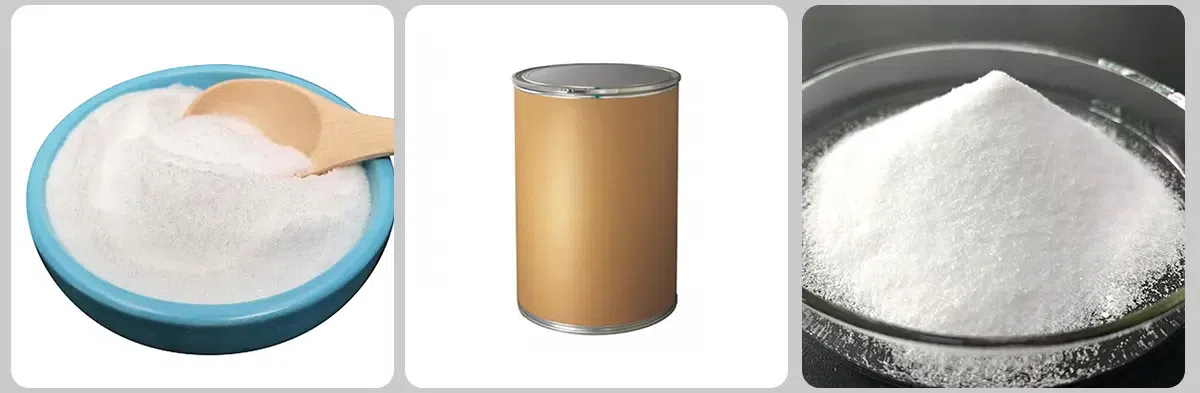
| Form | Crystalline Powder |
| Color | White to light yellow |
| Water Solubility | 3 g/L (50 ºC) |
| Sensitive | Air Sensitive |
| BRN | 385863 |
| InChIKey | KUCOHFSKRZZVRO-UHFFFAOYSA-N |
| LogP | 1 at 20.1℃ and pH6.6-6.8 |
| CAS DataBase Reference | 623-27-8(CAS DataBase Reference) |
| NIST Chemistry Reference | 1,4-Benzenedicarboxaldehyde(623-27-8) |
| EPA Substance Registry System | 1,4-Benzenedicarboxaldehyde (623-27-8) |
| Hazard Codes | Xi |
| Risk Statements | 36/37/38-36/37 |
| Safety Statements | 22-24/25-36-26-37/39 |
| WGK Germany | 1 |
| RTECS | WZ0430000 |
| Hazard Note | Irritant |
| TSCA | Yes |
| HS Code | 29122900 |
| Hazardous Substances Data | 623-27-8(Hazardous Substances Data) |
Product Application
Terephthalaldehyde is mainly employed in the manufacture of whitening agents, resins, plastics and pesticides. It also participates in the synthesis of numerous organic compounds, including intermediates like bromocyclopentane.
Furthermore, it can be utilized for preparing solid iodophor disinfectants, in which surfactants serve as carriers to form complexes with iodine. These disinfectants feature broad-spectrum efficacy, high efficiency, powerful bactericidal capacity, favorable stability and safe application. They are suitable for scenarios such as preoperative skin disinfection, as well as sanitation treatment for oral, intestinal, urethral and cervical mucosal surfaces.