
Product Description
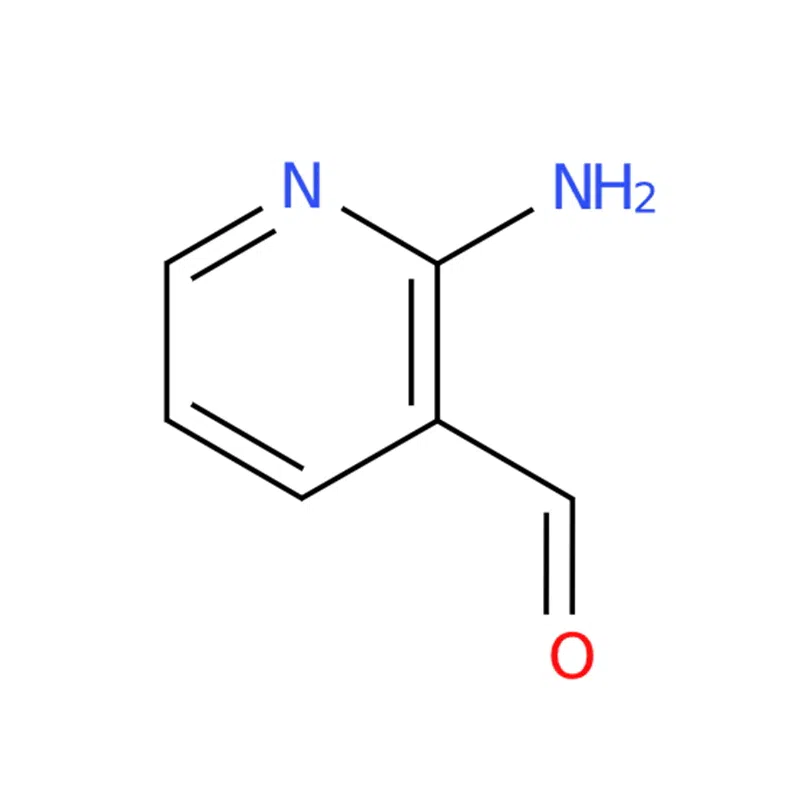
2-Amino-3-pyridinecarboxaldehyde is an alkaline pyridine-based derivative that is extensively employed in organic synthesis and serves as a key pharmaceutical intermediate. It can form pyridine-containing organic molecules via condensation, cyclization, substitution and other reactions, rendering it highly valuable for fundamental chemical research. Its molecular structure contains several reactive functional groups, namely a pyridine ring, an amino group and a highly reactive aldehyde group, which support a broad range of chemical conversions. Notably, this compound is susceptible to oxidizing agents and may degrade upon easy oxidation into nitrogen oxides.
Product Parameter
| Melting point | 98-102 °C (lit.) |
| Boiling point | 290.7±25.0 °C(Predicted) |
| density | 1.264±0.06 g/cm3(Predicted) |
| Fp | >300℃ |
| storage temp. | Keep in dark place,Sealed in dry,Room Temperature |
| solubility | Chloroform (Slightly), Methanol (Slightly) |
| pka | 4.99±0.36(Predicted) |
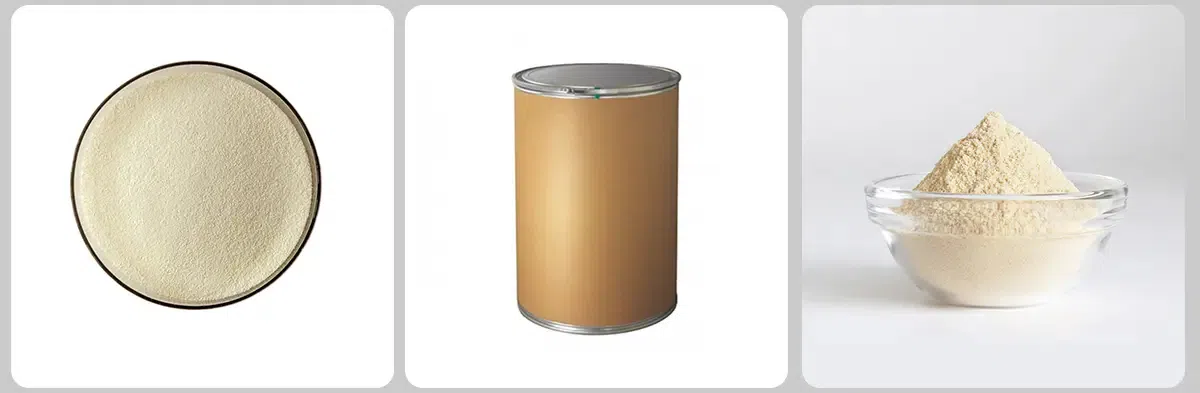
| form | Powder, Crystals and/or Chunks |
| color | Yellow to light brown |
| Water Solubility | insoluble |
| Sensitive | Air Sensitive |
| BRN | 109598 |
| InChIKey | NXMFJCRMSDRXLD-UHFFFAOYSA-N |
| CAS DataBase Reference | 7521-41-7(CAS DataBase Reference) |
| Hazard Codes | Xi,Xn |
| Risk Statements | 36/37/38-20/21/22 |
| Safety Statements | 26-36-36/37/39 |
| WGK Germany | 3 |
| HazardClass | IRRITANT |
| PackingGroup | II |
| HS Code | 29339900 |
Chemical Properties
2-Amino-3-pyridinecarboxaldehyde can be employed to prepare pyridine-type organic ligands and functional small molecules by utilizing its amino and aldehyde functional groups. Such ligands are extensively used in coordination chemistry and catalysis, capable of coordinating effectively with metal ions to drive highly selective and efficient catalytic reactions in organic synthesis.
Moreover, diverse functional groups can be grafted onto the pyridine ring through chemical modification, facilitating the construction of a wide range of functionalized molecules. These compounds hold promising applications in materials science, optoelectronic devices, sensors and biological fields, such as fluorescent probes, bioactive agents and high-performance functional materials.