
Product Description
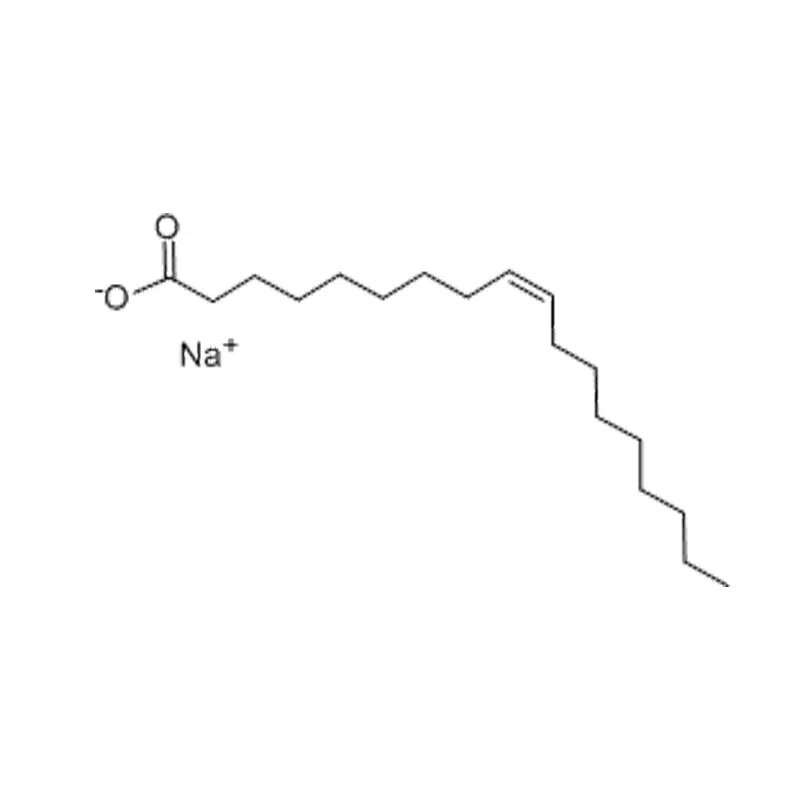
Sodium oleate, chemically denoted as C₁₇H₃₃CO₂Na and also called sodium octadecenoate, is an organic compound. It serves as a major constituent of olive-oil-based soaps and tallow-derived soaps.
This substance can be synthesized by reacting oleic acid with sodium hydroxide. Its molecular structure contains both hydrophilic and hydrophobic groups, which grants sodium oleate exceptional emulsifying, penetrating and detergency capabilities.
It dissolves well in hot water, rendering it ideal for a wide range of industrial uses. Functioning as an anionic surfactant, sodium oleate is extensively utilized and also commonly employed as a waterproofing agent for textiles.
Chemical Properties
| Melting point | 232-235 °C (lit.) |
| Srage temp | -20°C |
| Solubility | Methanol (Slightly) |
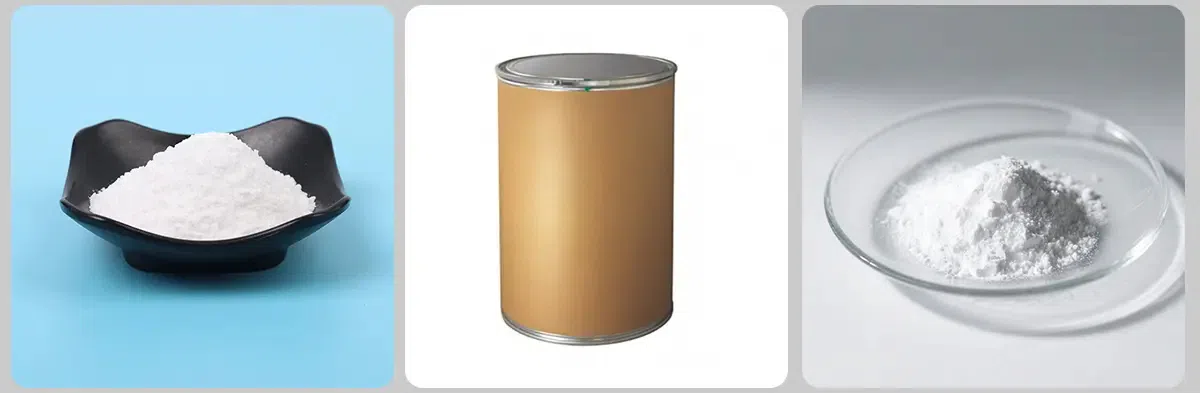
| Form | Powder |
| Color | White to slightly yellow |
| Odor | slt tallow odor |
| Water Solubility | soluble H2O, partially decomposes; soluble alcohol [HAW93] |
| Merck | 146828 |
| BRN | 4046357 |
| Hydrophilic-Lipophilic Balance (HLB) | 18 |
| Dielectric constant | 2.7(20℃) |
| Stability | Stable. Incompatible with strong oxidizing agents. |
| InChI | InChI=1S/C18H34O2.Na/c1-2-3-4-5-6-7-8-9-10-11-12-13-14-15-16-17-18(19)20;/h9-10H,2-8,11-17H2,1H3,(H,19,20);/q;+1/p-1/b10-9-; |
| InChIKey | BCKXLBQYZLBQEK-KVVVOXFISA-M |
| SMILES | C(CCCCCC([O-])=O)C/C=C\CCCCCCCC.[Na+] |
| LogP | 7.698 (est) |
| CAS DataBase Reference | 143-19-1(CAS DataBase Reference) |
| EPA Substance Registry System | Sodium oleate (143-19-1) |
| Safety Statements | 22-24/25-25-24 |
| WGK Germany | 1 |
| RTECS | RK1200000 |
| F | 46318 |
| HS Code | 29161500 |
| Hazardous Substances Data | 143-19-1(Hazardous Substances Data) |
| Toxicity | LD50 ivn-mus: 152 mg/kg RPOBAR 2,327,70 |
Product Application
Chemically-grade pure sodium oleate is extensively applied in mineral separation, textile waterproofing, and soap production. It also acts as an anionic surfactant and high-efficiency waterproofing agent for fabrics across multiple industrial scenarios.
Moreover, analytical-grade (AR) sodium oleate is utilized in laboratory and research fields, especially for activating protein kinase C within liver cells.