
Product Description
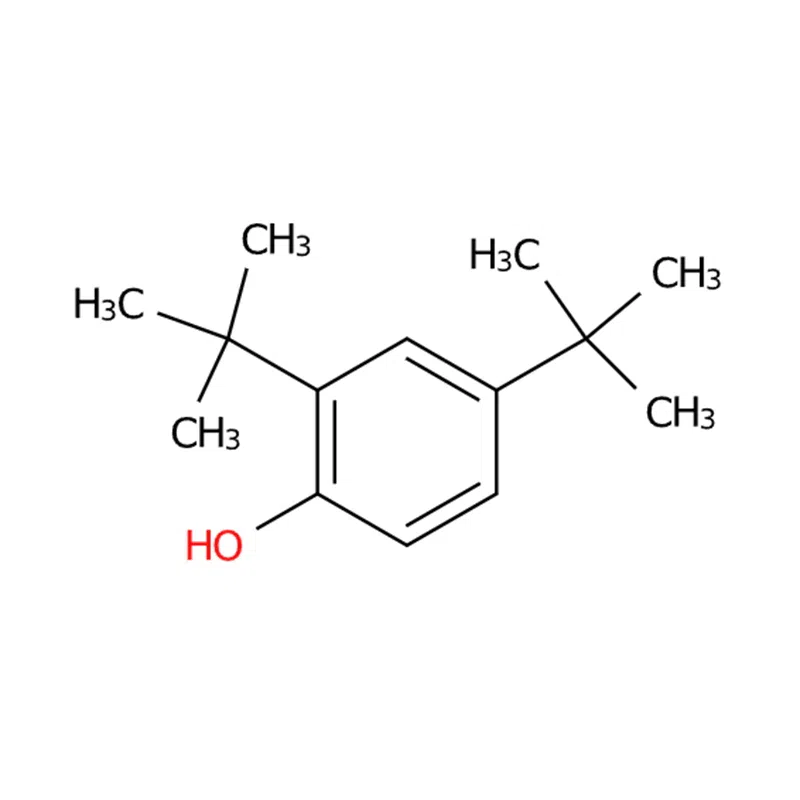
2,4-Di-tert-butylphenol is a naturally plant derived compound that functions as a vital intermediate for fine chemical manufacturing. It is mainly employed to produce auxiliary antioxidant 168, and also participates in the synthesis of polymers including polyisobutylene, polyamide and polycarbonate.
Moreover, it can be utilized to prepare antioxidants such as 300 and 314, UV absorbers, light stabilizer 120, dyes, textile auxiliaries and 2402 resin. Additionally, it has applications in synthetic fragrances, activator 460, initiator TBCP, pesticide emulsifiers and multiple additive formulations.
Chemical Properties
| Melting point | 53-56 °C(lit.) |
| Boiling point | 265 °C(lit.) |
| Density | 0.887 |
| Vapor pressure | 1 mm Hg ( 84.5 °C) |
| Refractive index | 1.508 |
| Fp | 239 °F |
| Storage temp. | Store below +30°C. |
| Solubility | water: soluble0.033g/L at 25°C |
| Form | Crystalline Solid |
| Pka | 11.56±0.18(Predicted) |
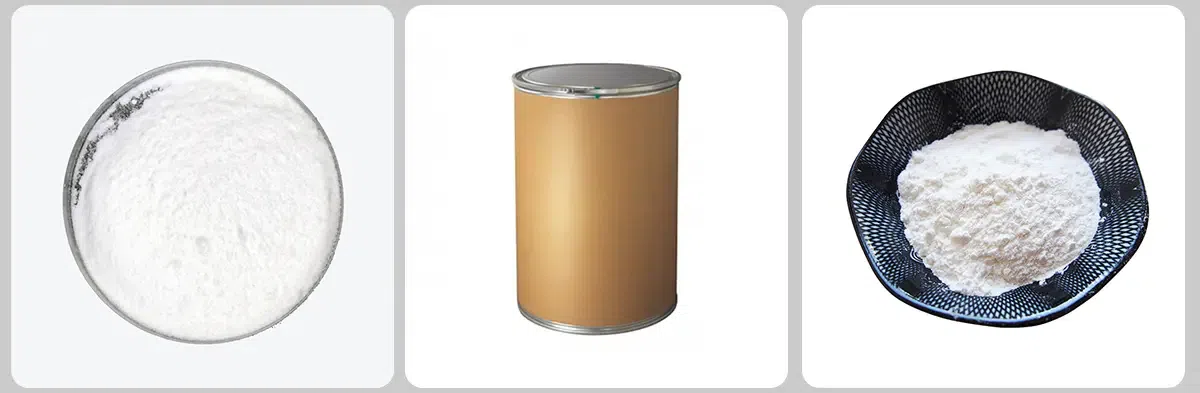
| Color | White to yellow |
| PH | 4.5 (H2O, 20℃)(saturated aqueous solution) |
| Water Solubility | practically insoluble |
| BRN | 1910383 |
| Stability | Stable. Combustible. Incompatible with acid chlorides, oxidizing agents, acid anhydrides, copper, copper alloys, bases, brass. |
| InChIKey | ICKWICRCANNIBI-UHFFFAOYSA-N |
| LogP | 4.8 at 23℃ |
| CAS DataBase Reference | 96-76-4(CAS DataBase Reference) |
| NIST Chemistry Reference | Phenol, 2,4-bis(1,1-dimethylethyl)-(96-76-4) |
| EPA Substance Registry System | 2,4-Di-tert-butylphenol (96-76-4) |
Safety Information
| Hazard Codes | Xi,N,Xn,T,F |
| Risk Statements | 36/37/38-50/53-43-36/38-22-51/53-41-39/23/24/25-23/24/25-11-52/53 |
| Safety Statements | 26-36/37-61-37/39-29-24-45-36/37/39-60 |
| RIDADR | UN 2430 8/PG 3 |
| WGK Germany | 2 |
| RTECS | SK8260000 |
| TSCA | Yes |
| HazardClass | 9 |
| PackingGroup | III |
| HS Code | 29071900 |
| Hazardous Substances Data | 96-76-4(Hazardous Substances Data) |
Product Application
It can act as an intermediate for manufacturing antioxidants, stabilizers and UV absorbers. Functioning both as an antioxidant and UV absorber itself, it is a key precursor for numerous light stabilizers and antioxidant products.
Its applicable products cover Antioxidant 168, Antioxidant P-EPQ, Light Stabilizer 120, UV-327 and UV-320 UV absorbers, as well as activators for reclaimed rubber. It can also be developed into synthetic intermediates and plasticizers, and serves as a primary raw material for producing phosphite-type antioxidants.