
Product Details
Polybutylene terephthalate (PBT) resin is broadly applied to fabricate structural parts across automotive, electronic, electrical, mechanical, and instrumentation industries. Glass-fiber-reinforced PBT modified with flame retardants is widely adopted for fire-resistant components in televisions, including output transformer frames and bases, as well as connectors for various electrical devices such as junction boxes and switches.
PBT can be compounded with other polymers to produce polymer alloys, whose primary market lies within the automotive sector, where they are used for parts like vehicle bumpers and ignition system components. These alloy materials are also gaining growing adoption in the food industry, notably for manufacturing microwave-safe heating containers capable of withstanding temperatures above 160 °C.
Product Parameter
| English Name | Poly(butylene terephthalate) |
| English Synonyms | terephthalicacid-1,4-butanediolpolymer;terephthalicacid-tetramethyleneglycolcopolymer; terephthalicacidtetramethyleneglycolpolymer;tetramethylenediol-terephthalicacidpolymer; tetramethyleneglycol-terephthal icacidpolymer;Thermocomp WC-1006;Ultradur B 2550; Ultradur B 4300 G10 |
| CAS Number | 26062-94-2 |
| Molecular Formula | C12H1606 |
| Molecular Weight | 256.25 |
| EINECS Number | 607-857-5 |
| Melting point | 226℃ |
| Density | 1.31 g/mL at 25 °C(lit.) |
| Storage conditions | -70°℃ |
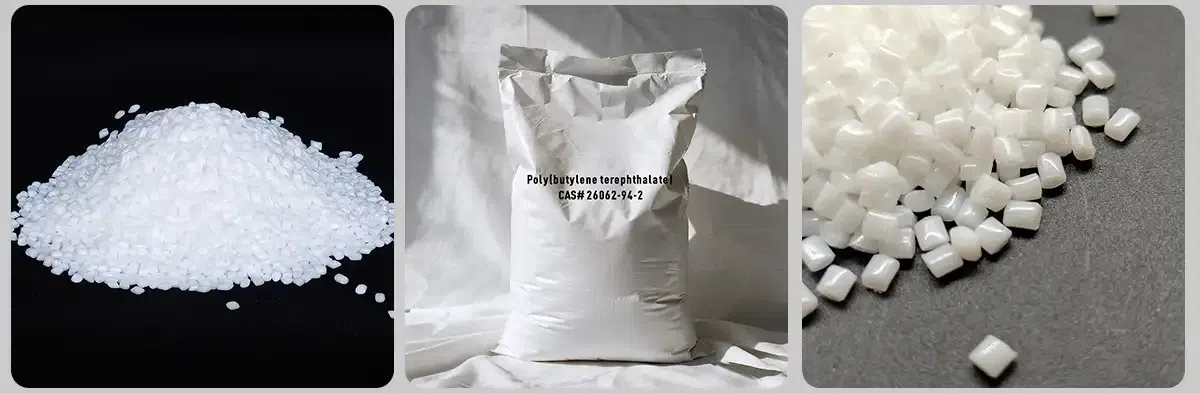
| Form | Granular |
| Biological origin | human |
| Specific activity | 6-8nmol/min-mg |
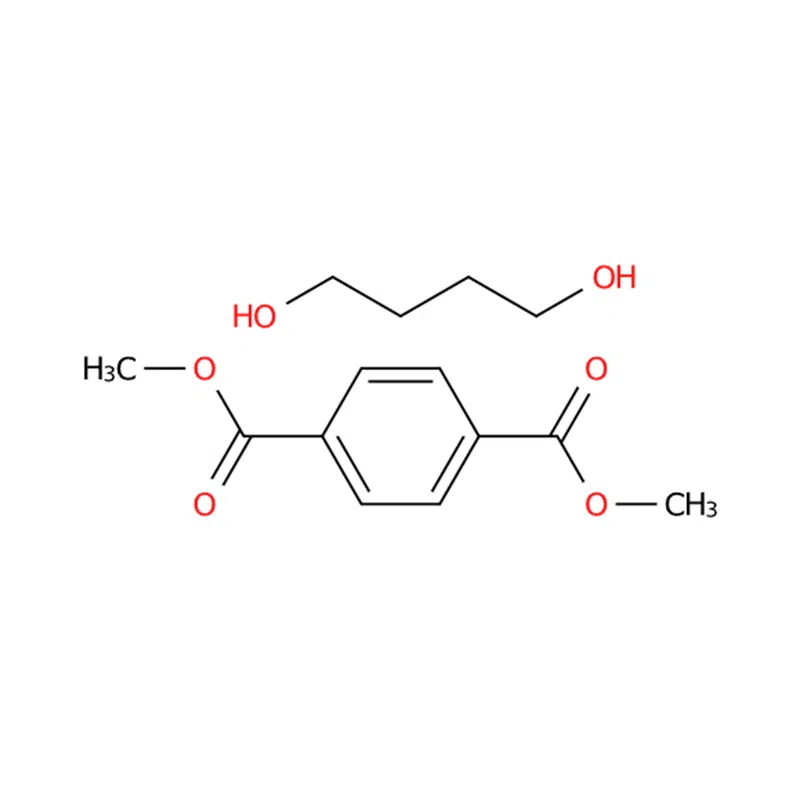
| InChI | InChI=1S/C8H604.C4H1002/c9-7(10)5-1-2-6(4-3-5)8(11)12;5-3-1-2-4-6/h1-4H,(H,9,10) (H,11,12); 5-6H,1-4 H2 |
| InChI key | PCVVBHUFWPHCAL-UHFFFAOYSA-N |
| SMILES | C(C1C=CC(C(=O)O)=CC=1)(=O)O.C(CO)CCO |