
Product Details
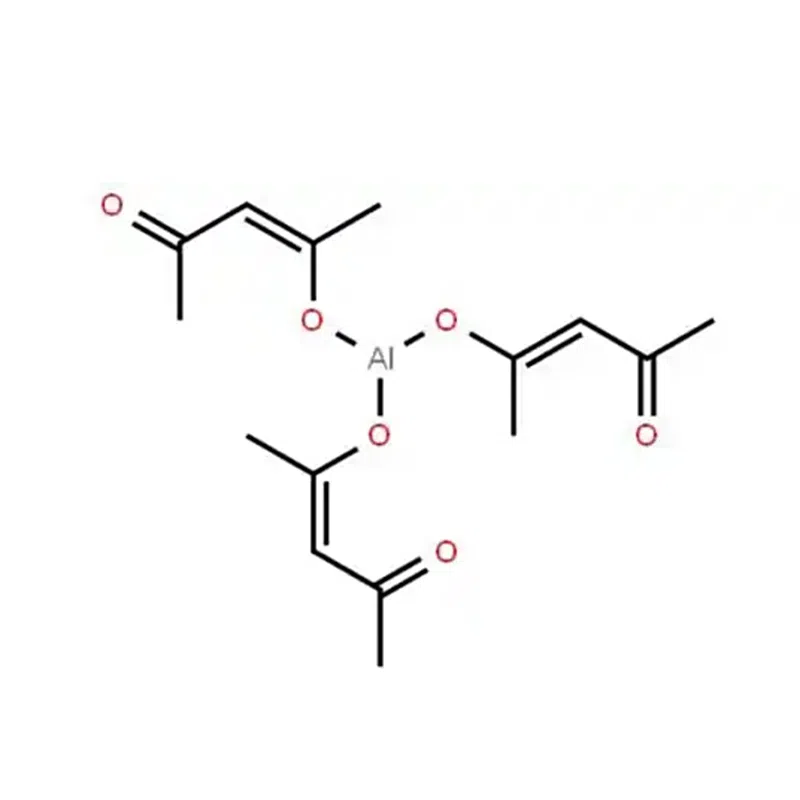
Aluminum acetylacetonate is a key organic intermediate used in the synthesis of substituted acetylacetonate compounds.
Parameters
| Melting point | 190-193 °C(lit.) |
| Boiling point | 315 °C(lit.) |
| density | 1,27 g/cm3 |
| bulk density | 500kg/m3 |
| vapor pressure | 0Pa at 25℃ |
| Fp | 314-316°C |
| storage temp. | Store below +30°C. |
| solubility | 3g/l |
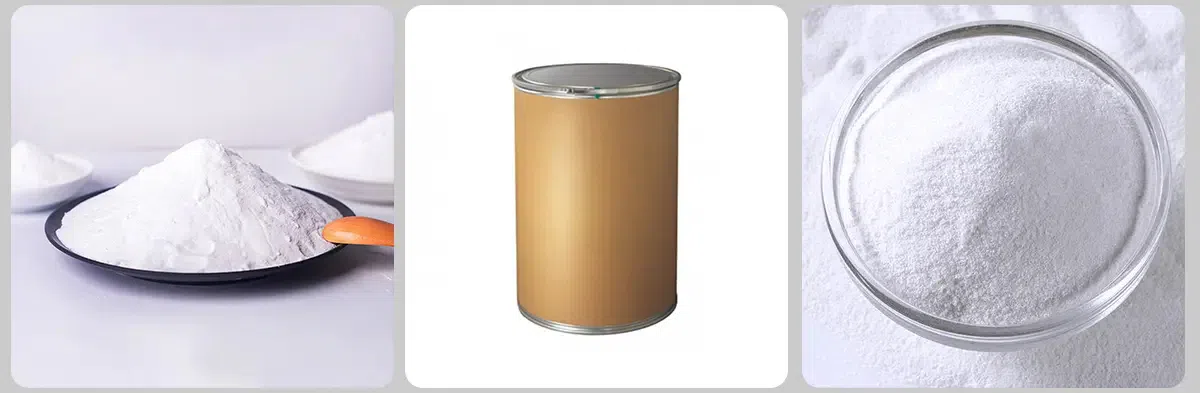
| form | Crystalline Powder |
| color | White to cream |
| Specific Gravity | 1.279 |
| PH | 8 (3g/l, H2O, 20℃) |
| Water Solubility | 2.5 g/L (20 ºC) |
| Hydrolytic Sensitivity | 4: no reaction with water under neutral conditions |
| BRN | 4157942 |
| Stability | Stable. Incompatible with strong oxidizing agents. |
| InChIKey | KILURZWTCGSYRE-LNTINUHCSA-K |
| LogP | -1.67 at 25℃ |
| CAS DataBase Reference | 13963-57-0 |
| NIST Chemistry Reference | Aluminum tris(acetylacetonate)(13963-57-0) |
| EPA Substance Registry System | Aluminum, tris(2,4-pentanedionato-.kappa.O,.kappa.O')-, (OC-6-11)- (13963-57-0) |
Safety Information
| Hazard Codes | T |
| Risk Statements | 25-36/37/38-36-43 |
| Safety Statements | 26-36/37/39-45-28A-36/37 |
| RIDADR | UN 3467 6.1/PG 2 |
| WGK Germany | 3 |
| RTECS | BD2230000 |
| Autoignition Temperature | 500 °C |
| TSCA | Yes |
| HazardClass | 6.1 |
| PackingGroup | III |
| HS Code | 29420000 |
| Toxicity | LD50 orally in Rabbit: 48.7 mg/kg |
Aluminum acetylacetonate is water-insoluble yet soluble in organic solvents. Upon heating, it reacts with alkalis, acids and water. This compound can be prepared via the reaction between aluminum chloride (AlCl₃) and acetylacetone.