
Product Description
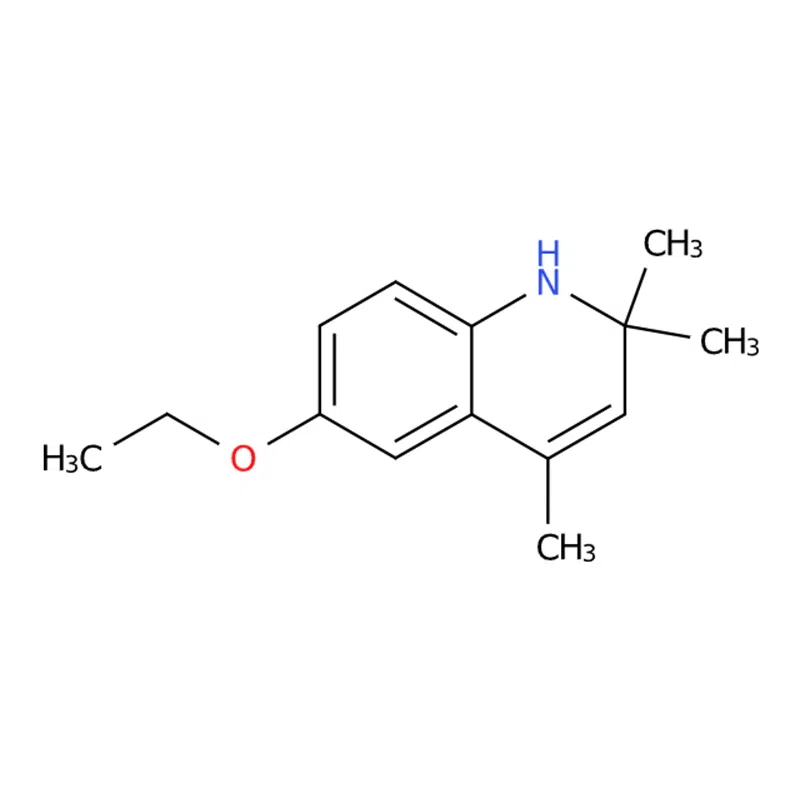
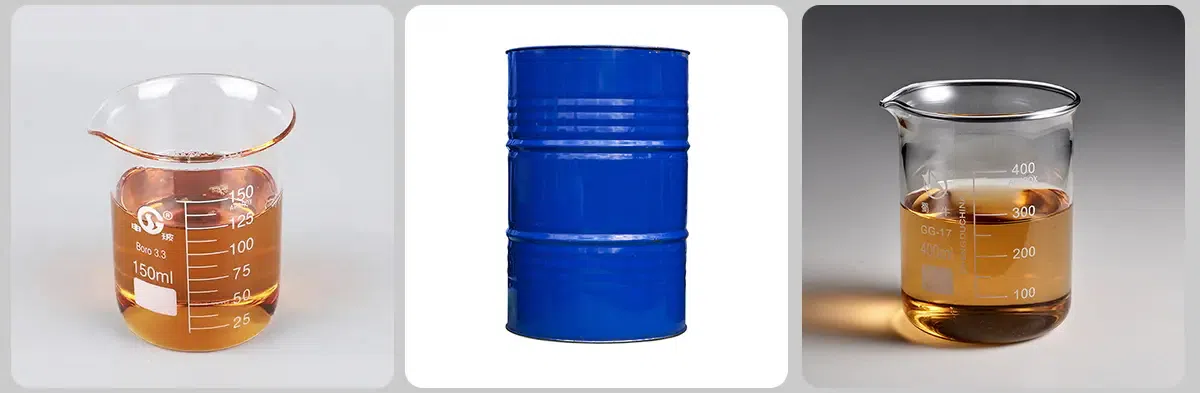
Ethoxyquin (also abbreviated as EQ or EMQ), commercially known under brand names including Sandoquin and Hupiling, is a yellow to brown viscous liquid with a distinctive odor. It is insoluble in water yet highly soluble in organic solvents such as benzene, gasoline, ether, alcohols, carbon tetrachloride, acetone and alkyl dichlorides.
This compound is susceptible to oxidation under natural light; prolonged contact with air and oxygen may darken its color to brown and raise its viscosity. For enhanced stability, it should be sealed in light-proof containers. Notably, such discoloration does not compromise its functional properties.
As a synthetic antioxidant with a standard purity of 97.5%, ethoxyquin is mainly utilized for antioxidant purposes in food and feed industries.
Chemical Properties
| Melting point | <0°C |
| Boiling point | 123-125°C |
| Density | 1.03 g/mL at 20 °C (lit.) |
| Vapor pressure | 0.035Pa at 25℃ |
| Refractive index | 1.569~1.571 |
| Fp | 137 °C |
| Storage temp | 2-8°C |
| Solubility | ethanol: 50 mL/L, clear, brown |
| Pka | 5.02±0.70(Predicted) |
| Color | Yellow to Very Dark Brown |
| Water Solubility | <0.1 g/100 mL at 20 ºC |
| Merck | 143753 |
| BRN | 158223 |
| Stability | Stable. Combustible. Incompatible with oxidizing agents, strong acids. Polymerizes if heated. May polymerize upon exposure to light and air. |
| InChIKey | DECIPOUIJURFOJ-UHFFFAOYSA-N |
| LogP | 3.39 |
| CAS DataBase Reference | 91-53-2(CAS DataBase Reference) |
| NIST Chemistry Reference | Quinoline, 6-ethoxy-1,2-dihydro-2,2,4-trimethyl-(91-53-2) |
| EPA Substance Registry System | Ethoxyquin (91-53-2) |
Safety Information
| Hazard Codes | Xn |
| Risk Statements | 22 |
| Safety Statements | 24 |
| RIDADR | 3082 |
| WGK Germany | 1 |
| RTECS | VB8225000 |
| F | 37478 |
| HazardClass | 9 |
| PackingGroup | III |
| HS Code | 29334900 |
| Hazardous Substances Data | 91-53-2(Hazardous Substances Data) |
| Toxicity | LD50 orally in rats, mice: 1920, 1730 mg/kg (Piul'skaya) |
Product Application
Ethoxyquin is commonly applied by surface-spraying onto feed materials. It effectively suppresses oil rancidity and protein oxidation, prevents vitamin decomposition, and delivers antioxidant protection. The recommended addition dosage in feed is 100–150 g/kg. Over-dosage (exceeding 0.1%) may lead to darkening or yellowing of pork fat, which impairs carcass quality.
Commercial ethoxyquin products are mainly categorized into two forms. The first is powder-type formulations with an ethoxyquin content of 10%–70%, featuring stable physical properties, favorable flowability and homogeneous dispersion for simple, even blending with feed. The second is liquid-type products, generally formulated with water or glycerol as solvents.